
All Services Restoration Services

Smoke Damage Restoration

Smoke odor removal, soot cleanup, insulation concerns, duct smoke removal, and indoor air quality support.

Smoke Damage Restoration
Reliable Smoke Damage Restoration

Smoke, Soot, and Odor Cleanup After a Fire

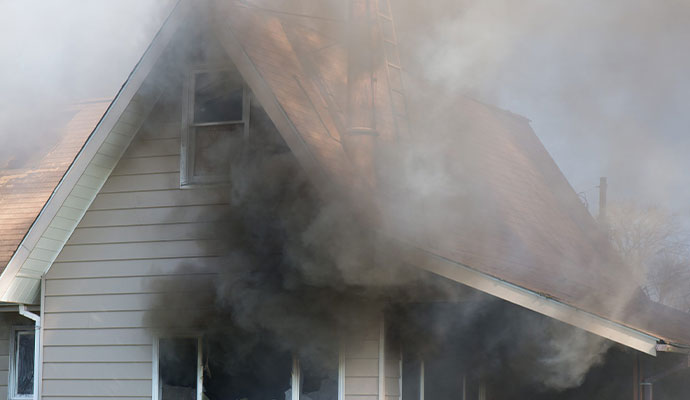
Smoke damage can travel through rooms, walls, insulation, ductwork, and contents even when the fire itself was small or contained to one area. A kitchen fire, dryer fire, or furnace puff-back can fill an entire home with smoke residue that settles into every porous surface, including insulation, drywall, upholstery, clothing, and ductwork, and the odor will return repeatedly until the source residue is removed, not just masked.

First Response Restoration addresses smoke damage systematically: identifying where residue has traveled, cleaning surface soot with methods matched to the material type and residue category, removing heavily affected materials that cannot be cleaned, treating odor at the source with professional deodorization, and evaluating HVAC and duct systems where smoke recirculation is a concern. We serve residential and commercial properties throughout Massachusetts and Rhode Island.

Smoke Damage Restoration
Quality Smoke Damage Restoration

Professional Smoke Damage Restoration for Homes and Businesses

Smoke cleanup that does not fully address residue in hidden spaces is one of the most common reasons smoke odor returns in a home weeks after a fire. Air fresheners and surface wiping cannot reach soot embedded in insulation, trapped in wall cavities, or coating the inside of ductwork. The odor returns because the source was never removed.

Whether the damage came from a kitchen fire, dryer fire, electrical fire, furnace malfunction, or smoke from a neighboring property, First Response Restoration approaches smoke restoration with the thoroughness the problem requires. We serve Boston, Providence, Bridgewater, Plymouth, Cambridge, Worcester, and surrounding New England communities with smoke and soot restoration for residential and commercial properties, including complete documentation for insurance claims involving smoke damage.

What To Expect

Smoke Damage Restoration Details

Smoke moves beyond the fire area

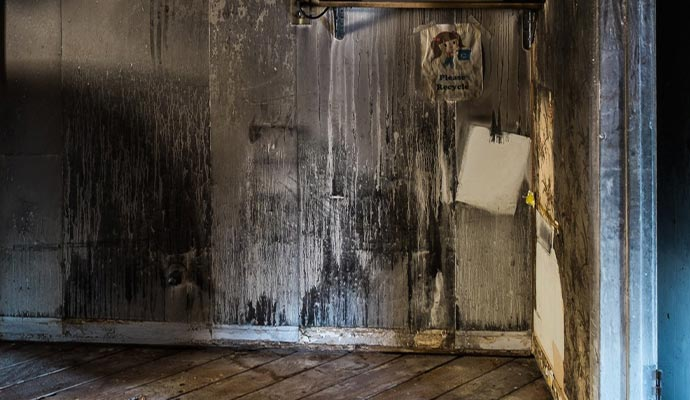
Even a contained kitchen, dryer, furnace, or electrical fire can send smoke into adjacent rooms, closets, insulation, ductwork, furniture, and soft goods throughout the building. Smoke restoration starts with identifying where residue traveled, not just where flames were visible. The visible soot on nearby walls is the easy part; the residue in attic insulation, inside wall cavities, coating duct surfaces, and embedded in upholstered furniture often requires more systematic evaluation and cleaning to fully address persistent odor.
Odor removal depends on source removal

Air fresheners, ozone machines, and surface cleaning cannot solve smoke odor when residue remains in porous materials or hidden spaces. Ozone treatment in particular is a temporary measure. Once the ozone dissipates, residue that was not removed will off-gas odor again. First Response Restoration targets the source of odor through cleaning, selective material removal, ventilation support, and professional deodorization methods designed to reach areas that surface cleaning cannot. Permanent odor control requires that the residue bearing materials are either cleaned to the standard the material allows or removed from the property.

Different soot needs different cleaning

Protein residue from cooking fires is nearly invisible but extremely pungent, and spreads as a thin, greasy film that can cover an entire kitchen, which is why post-cooking-fire odor can be so pervasive and persistent. Synthetic smoke from burning plastics and furnishings is oily and can be smeared if cleaned incorrectly. Wood smoke deposits are drier and more responsive to dry cleaning methods in many cases. Using the wrong cleaning process on the wrong soot type can permanently set stains, damage surfaces, and leave odor-bearing residue behind. Our technicians evaluate both the residue type and the surface before cleaning.

When smoke cleanup should not wait

Call quickly when smoke has affected bedrooms, HVAC systems, electronics, kitchens, commercial areas, or spaces that need to be reoccupied. Early cleanup limits the depth of odor absorption into porous materials, reduces permanent staining and corrosion on surfaces and fixtures, and makes the property safer to occupy during the restoration process. The longer soot sits on metal, electronics, and soft surfaces, the more permanent the damage becomes, and the more items that could have been cleaned become replacement items in the insurance scope.

Our Services

Specialized Smoke Damage Restoration Solutions

  • Smoke odor that returns after cleaning is almost always the result of residue remaining in porous materials: insulation, drywall, carpet padding, wood framing, upholstery, or ductwork that was not identified or fully addressed. Our technicians trace smoke migration beyond the visible affected area, clean or remove residue-bearing materials, and apply professional deodorization techniques including thermal fogging or hydroxyl treatment when appropriate. We focus on eliminating the odor source rather than covering it with temporary treatments.

  • Different types of soot, from wood fires, synthetic materials, proteins like grease or food, or petroleum-based sources, behave differently on surfaces and require different cleaning methods. Using the wrong approach can smear oily residue, damage finishes, or set protein smoke stains permanently. First Response Restoration evaluates the soot type and the surface material before selecting cleaning methods, removing residue carefully from walls, ceilings, cabinets, fixtures, and contents where restoration is possible and supported by the insurance scope.

  • Forced-air HVAC systems are highly effective at distributing smoke odor and fine particulate throughout a building during and after a fire event. Smoke that enters return air ducts, the air handler, or supply ducting recirculates through every room in the home every time the system runs, explaining why smoke odor seems to reappear in rooms far from the fire's origin. First Response Restoration evaluates duct contamination as part of the smoke damage assessment and helps coordinate cleaning steps for contaminated duct systems when the scope requires it.

  • After visible soot cleanup is complete, fine smoke particles and volatile organic compounds from incomplete combustion can linger in the air and in porous materials, affecting comfort and safety in occupied spaces. First Response Restoration focuses on the residue and materials that continue releasing odor and particles into the indoor environment, including affected insulation, soft goods, and structural materials that need removal or treatment, and supporting ventilation steps that reduce particle concentration during the cleanup process.

Contact Us

Get In Touch With First Response Restoration

Location 152 Elm Street Unit 3, Bridgewater, MA 02324
house
Working Hours
24-7, 365 Days a Year