
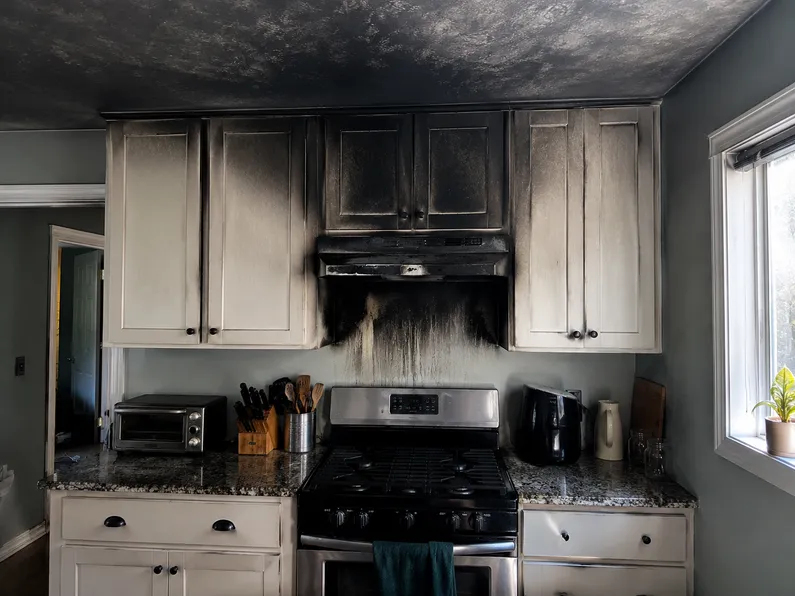
The fire was small. Maybe it was a kitchen grease fire that got out of hand before it was extinguished. Maybe something overheated on the stove, or a candle ignited nearby materials. The flames are out, the damage looks limited - but a week later, the smell is still there. It gets worse when you run the heat. It seems to fade, and then it comes back again.
This is one of the most common frustrations homeowners face after a minor fire: the fire itself was manageable, but the smoke odor refuses to leave.
Understanding why it keeps coming back is the first step toward getting rid of it for good.
Why Smoke Odor Persists
Smoke isn’t just air. It’s a complex mixture of gases, fine particles, and chemical compounds that travel through a structure during and after a fire. In even a small house fire or kitchen incident, smoke can spread far beyond the room where the fire occurred - moving through HVAC systems, penetrating wall cavities, and depositing on surfaces throughout the home.
When smoke contacts a surface, the particles and gases don’t just sit on top. They bond with porous materials - drywall, wood, insulation, fabric, and concrete all absorb smoke compounds at a molecular level. This is why wiping down visible soot doesn’t eliminate the smell. The odor-causing compounds are embedded in the materials themselves.
Heat accelerates this process. When you turn on your furnace or baseboard heat, it warms the structure and the embedded compounds off-gas, releasing the odor back into your living space. That’s why the smell returns every time the heat kicks on, or why a warm summer day can make a home that seemed fine in winter suddenly smell like smoke again.
The HVAC system is another major culprit. Smoke that enters your ductwork during a fire event gets deposited on duct walls, blower components, and the filter. Every time the system runs, it redistributes those particles and odors throughout the home.
What Doesn’t Work
Homeowners often try several approaches before calling a professional, and it’s worth understanding why they fall short.
Candles, sprays, and air fresheners mask odor temporarily. They don’t address the source compounds embedded in building materials. The masking smell fades, and the smoke odor resurfaces.
Opening windows helps with ventilation but doesn’t remove smoke particles from surfaces. It can temporarily improve air quality, but it won’t resolve the persistent odor.
Cleaning visible surfaces with household cleaners addresses surface-level soot but doesn’t reach the compounds that have penetrated porous materials. You can scrub a wall until it’s visibly clean and still have a smoke odor coming from the drywall behind the paint.
Replacing air filters is a good step, but it’s not enough if the ductwork itself is contaminated. A new filter on a dirty duct system still circulates smoke-laden air.
Professional smoke odor removal works differently because it targets the source - not the symptom.
What Professional Smoke Odor Removal Looks Like
Effective smoke odor remediation after a small fire typically involves several overlapping approaches, selected based on the extent and location of the contamination.
Professional deodorization may be used after residue and damaged materials are addressed. The method depends on the affected materials, where smoke traveled, ventilation, occupancy, and the conditions found during the assessment.
Specialized deodorization equipment may be used after residue removal when conditions and manufacturer instructions support it. Equipment selection depends on the affected materials, the contaminants present, ventilation, and whether people or pets occupy the space. No deodorization device should replace source removal, surface cleaning, or an assessment of fire-related hazards.
HVAC assessment may be appropriate when smoke entered the ventilation system. The condition of ducts, filters, blowers, coils, and other components helps determine whether professional cleaning or replacement should be considered.
Soot removal and surface cleaning using professional-grade products designed for smoke damage removes the fine particles and residue that household cleaners can’t fully address. This often includes walls, ceilings, light fixtures, windows, and other surfaces where soot has settled.
Contents assessment and cleaning addresses belongings such as clothing, furniture, electronics, books, and other items exposed to smoke. The material, residue, value, and extent of damage determine whether an item may be cleaned or should be documented for removal or replacement decisions.
In cases where smoke penetration is deep and extensive, portions of drywall, insulation, or other porous materials may need to be removed and replaced. The EPA’s guidance on ash and indoor air after a fire recommends avoiding cleanup methods that stir ash into the air and describes protective measures for residue cleanup. Sealing should happen only after affected surfaces have been properly cleaned and evaluated.
Why the Size of the Fire Doesn’t Determine the Size of the Problem
This is something many homeowners don’t expect. A large, destructive fire causes obvious damage - but smoke odor from a small fire can be just as persistent, and sometimes harder to fully resolve, because the structure itself remained largely intact. There’s nothing visibly wrong, no burned materials to remove, no clear starting point - just a smell that won’t leave.
A small kitchen fire that produces heavy smoke for even a few minutes can contaminate an entire floor of a home. Smoke moves fast, spreads widely, and deposits on surfaces immediately. The fire’s size doesn’t limit how far the smoke traveled.
When to Call a Professional
If you have cleaned visible damage from a small fire and the odor remains or keeps returning, residue may still be present in porous materials, contents, or the HVAC system. A professional assessment can help identify the affected areas and the next appropriate cleaning step.
Call a restoration company when:
- You can still smell smoke a week or more after the fire
- The smell returns when you run the heat or air conditioning
- The odor seems to be coming from walls, ceilings, or the HVAC system
- You’ve tried cleaning and deodorizing without lasting results
- The smell is affecting your ability to live comfortably in the home These are signs that the contamination goes beyond surface level and requires professional equipment and techniques to resolve.
First Response Restoration Can Help
First Response Restoration provides smoke and soot restoration and smoke odor removal services throughout Massachusetts and Rhode Island. Our team evaluates affected materials, removes residue, cleans salvageable surfaces, addresses contaminated materials when needed, and selects deodorization methods appropriate for the conditions.
We respond to fire and smoke damage calls 24/7 and offer free estimates. Our team can document affected areas, coordinate with your adjuster, and provide direct insurance billing when applicable. If smoke odor remains after a small fire, we can evaluate the source and recommend appropriate cleanup and deodorization steps.
Call us at (774) 670-5912 any time.


