
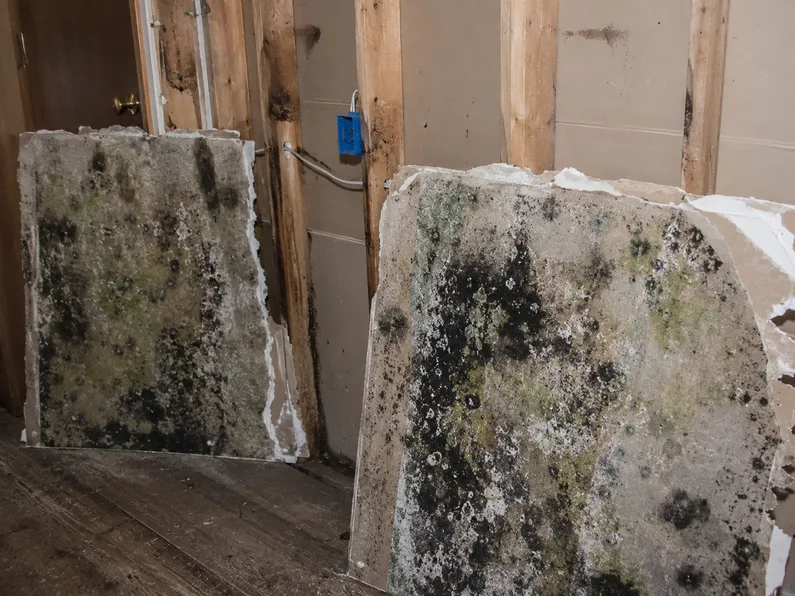
Mold After a Roof Leak: Signs It Has Spread Behind Walls
Roof leaks are deceptive. Water that enters through a damaged shingle, failed flashing, or an ice dam doesn’t always announce itself with a dramatic drip through the ceiling. It can travel silently - running along rafters, soaking into insulation, following the path of least resistance until it saturates drywall from behind and pools in a wall cavity where no one can see it.
By the time a homeowner notices discoloration on a ceiling or a soft spot in drywall, water has often been sitting in that space for days - sometimes weeks. And in that time, the conditions for mold growth have been building steadily.
Mold is one of the most serious secondary consequences of a roof leak. It can spread beyond the initial area of water intrusion, remain hidden for extended periods, and cause structural and health problems if it isn’t addressed properly. Here’s how to recognize the signs that mold has spread beyond what you can see - and what to do about it.
How Mold Develops After a Roof Leak
Mold spores are present naturally in both indoor and outdoor environments. Under normal conditions, they don’t cause problems. But when moisture levels in a space become elevated - through a roof leak, pipe failure, or any other water intrusion - spores that land on wet surfaces can begin to grow and colonize within 24 to 48 hours.
Roof leaks create ideal mold conditions. The space above a ceiling - the gap between drywall and the roof deck, often packed with insulation - is dark, poorly ventilated, and holds moisture well. Once water saturates insulation and the back side of drywall, that environment can support active mold growth for weeks without ever being seen from below.
As a colony grows, it sends out more spores. Those spores travel through air currents - and in an enclosed wall or ceiling cavity, they can migrate through gaps, cracks, and framing to establish new growth in adjacent areas. This is why mold discovered after a roof leak is often found in a wider area than the original water damage.
Signs That Mold May Have Spread Behind Walls
Visible mold on a surface is the obvious sign - but by the time mold appears on the face of a wall or ceiling, there’s almost always more growth behind it. Here are the less obvious indicators that mold has spread into wall cavities or concealed spaces.
Musty odor that doesn’t have an obvious source. A persistent musty smell, especially in upper rooms, attic spaces, or areas beneath a roof line, often indicates active mold growth in a hidden area. The smell comes from microbial volatile organic compounds that mold releases as it grows. If you can smell it but can’t see the source, the growth is likely behind a surface.
Soft, spongy, or discolored drywall. Drywall that has absorbed water from a roof leak may show discoloration - yellow or brown staining - on its visible face. If the drywall feels soft, bows slightly, or has areas that flex when pressed, moisture has penetrated the material. Mold growth on the back side of drywall frequently precedes visible surface signs.
Bubbling or peeling paint. Paint that bubbles, blisters, or peels away from a surface can indicate moisture beneath it. This is often an early sign that water has worked into the wall assembly - and that mold growth may be developing in the layer behind.
Staining that follows a pattern. Water stains that track along a ceiling or wall in a pattern - following the angle of a rafter, tracing a corner seam, spreading outward from a single point - indicate active or recent water movement. Follow the pattern to understand where moisture has traveled, not just where it’s most visible.
Unexplained allergy symptoms or respiratory irritation. Increased allergy symptoms, persistent coughing, or respiratory irritation that seems worse at home and better away from it can be a sign of elevated mold levels in the indoor environment. These symptoms are particularly relevant for household members with asthma, allergies, or immune system sensitivities.
Recent roof damage or suspected ice dam. Any event that could have allowed water entry - a storm that loosened shingles, visible ice dam formation along the eaves, a tree branch impact - should be treated as a potential source of hidden water damage until the interior has been properly assessed.
What Mold Remediation After a Roof Leak Involves
Remediating mold after a roof leak is a multi-step process that requires finding and addressing the full extent of the problem - not just what’s visible.
Moisture assessment. Before any mold can be addressed, technicians use thermal imaging cameras and moisture meters to map where water has traveled and where elevated moisture persists. This step is essential because mold remediation is ineffective if active moisture isn’t identified and addressed.
Containment. To prevent mold spores from spreading to unaffected areas during remediation, the work area is contained using plastic sheeting and negative air pressure. This is standard protocol for mold removal and a critical step that DIY efforts often skip.
Removal of contaminated materials. Mold-contaminated drywall, insulation, and other porous materials typically cannot be cleaned - they must be removed and properly disposed of. Attempting to clean or encapsulate mold in place without removing the source material is not effective and does not meet professional remediation standards.
Cleaning and treatment of affected framing and surfaces. After contaminated materials are removed, the underlying structure - roof deck, rafters, wall framing, subfloor - is cleaned using HEPA vacuuming and antimicrobial treatments to remove spore contamination and inhibit regrowth.
Drying the structure. Commercial drying equipment is deployed to bring moisture levels in the building materials down to safe thresholds. This step is as important as the physical removal - mold will return if elevated moisture is left unaddressed.
Clearance verification. Professional remediation includes post-remediation verification - confirming through air quality testing or visual inspection that the affected area has been successfully remediated before reconstruction begins.
Reconstruction. Once the area is dry and clear, damaged materials are replaced - new drywall, insulation, and finished surfaces restored to pre-loss condition.
The Roof Leak Must Be Fixed First
No mold remediation can be considered complete until the source of moisture is eliminated. A patched ceiling over an active roof leak is only a temporary fix. Before remediation begins, the roof itself must be repaired or protected - whether that means emergency tarping to stop ongoing water entry or a full shingle repair.
First Response Restoration can provide emergency board-up and tarping services to secure the structure while permanent repairs are coordinated.
Don’t Wait on a Roof Leak
The longer a roof leak goes unaddressed, the greater the likelihood of mold - and the more extensive that mold becomes. A leak that’s caught and dried within 24 hours is a very different situation than one that has been slowly soaking insulation for three weeks.
If you’ve discovered a roof leak in your Massachusetts home, or if you’re seeing any of the signs above - musty odor, soft drywall, staining with no obvious source - call a professional for an assessment before the problem grows.
First Response Restoration provides mold assessment, mold remediation, and water damage restoration services throughout Massachusetts and Rhode Island. Our IICRC-certified technicians use thermal imaging to identify hidden moisture, contain mold properly to prevent spread, and restore affected spaces to safe, pre-loss condition.
Call us at (774) 670-5912 for a free estimate. We’re available 24 hours a day and work directly with your homeowners insurance.


