
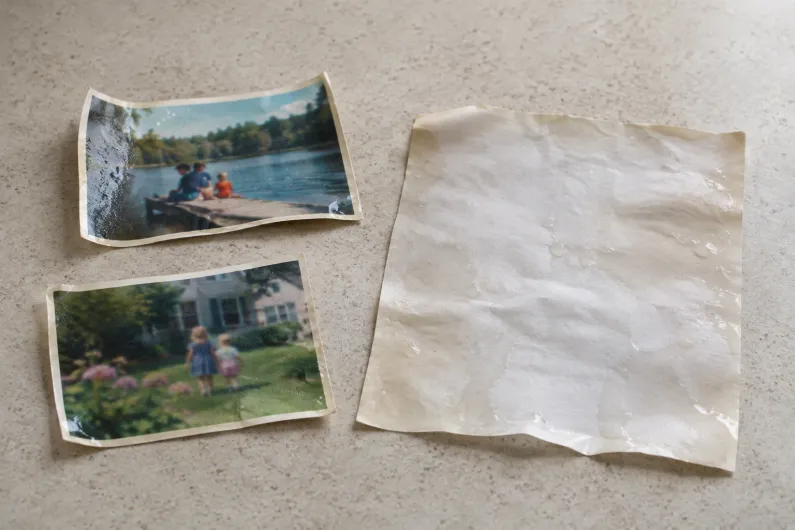
A small plumbing leak can leave family photographs and important papers damp even after the water is stopped. If the water is confirmed clean and the room is safe to enter, consider ordinary loose papers separately from photographs and irreplaceable originals. A little patience can prevent handling damage while you decide what needs specialist care.
Check the water and the room first
Stop the leak and make sure the area is safe before approaching belongings. If water may have reached electrical equipment, stay clear and get qualified help. From a safe position, photograph or record the affected property and contact your insurer about documentation. The Massachusetts Emergency Management Agency recommends documenting damage and warns against handling electrical equipment in wet conditions.
These steps are for a small, verified clean-water plumbing leak. If the source is unknown, or the items have been exposed to sewage, floodwater or mold, leave them alone and seek qualified help. The EPA advises using a professional experienced with contaminated water when sewage or other contaminated water caused the damage. Tell the professional about any visible or suspected mold and ask a conservator how to handle valued items.
Give ordinary papers room to dry
Start with a small number of loose, replaceable papers. Wet paper is fragile, so handle it carefully and as little as possible. The National Archives recommends careful handling of wet family papers.
If slight distortion is acceptable, lay suitable loose sheets on clean absorbent material in a cool, dry place with air circulating around them. The National Archives wet-records guidance describes air drying as an option for small quantities when some physical distortion is acceptable. Keep the sheets out of high heat and harsh sunlight, which can permanently damage records, according to the same National Archives guidance.
Check the material underneath and replace it when it becomes soaked. The National Archives recommends changing soaked blotting material beneath papers. If sheets are stuck together, or the paper is an irreplaceable original, pause and ask a qualified paper conservator for advice instead of pulling layers apart.
Treat loose photographs differently
For a suitable loose print, keep fingers and blotting material off the image surface. The FEMA and Smithsonian guide cautions against touching or blotting wet photographic surfaces. Lay the print face up on clean absorbent paper, with space around it so other objects do not touch the image. The same guide describes drying photographs face up and separated from one another.
Names and dates on an enclosure may be part of the family history too. When it can be done without damaging the image, keep or copy those identifying notes. The FEMA and Smithsonian guide recommends saving written names from photographic enclosures.
Stop when items are stuck or irreplaceable
Do not pull photographs or negatives apart if they are stuck together. FEMA and the Smithsonian warn against forcefully separating adhered images. If a photograph or document is stuck to frame glass, leave the assembly intact and seek advice; the National Archives says not to remove an object adhered to its frame glass.
For an unidentified older photographic process or a highly valued original, contact a qualified photograph conservator promptly. The National Archives recommends specialist advice for unidentified old processes and highly valued photographs. Describe the water source, the material and whether anything is stuck, and ask how to hold it safely until it can be assessed.
Do not assume every item should be frozen. The National Archives identifies some photographs and plate glass as exceptions to freezing. Ask the conservator for instructions suited to the actual object before freezing or soaking it.
Address the property as well as the keepsakes
Even a small leak can leave moisture in the surrounding building materials. If you need help assessing the affected property, our water damage restoration service is a place to start. Tell the restoration team which belongings are irreplaceable and arrange a qualified conservator separately for item-specific treatment. The outcome depends on the material, exposure and condition, so no single drying method can promise that every original will be saved.


