
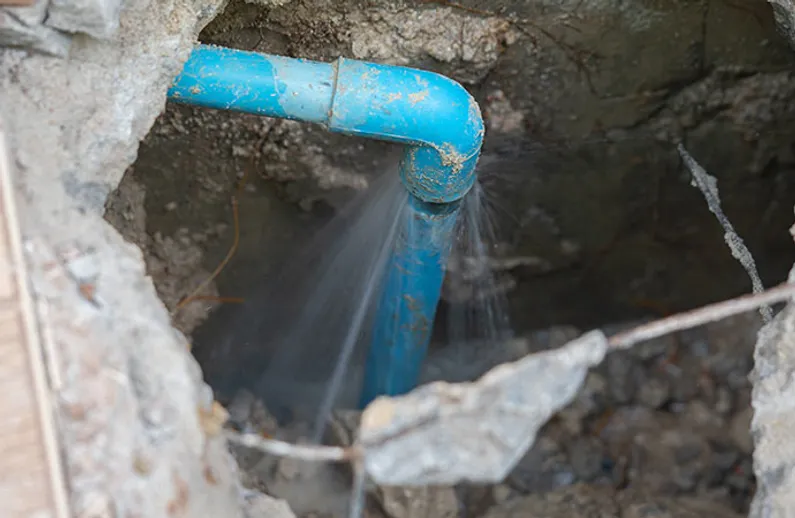
A leaking water heater can release far more water than it first appears to. A slow drip may soak a utility-room floor and wall base over days. A failed supply line or tank can flood a finished basement, storage area, or adjacent room in minutes.
If a water heater is leaking now, focus first on safety and source control. Then arrange a plumbing repair and assess whether water has reached materials that need professional drying. First Response Restoration provides water damage restoration for homes and businesses in Massachusetts and Rhode Island, including extraction, moisture mapping, structural drying, and insurance documentation.
1. Avoid electrical and burn hazards
Do not step into standing water if it is near outlets, an electrical panel, extension cords, appliances, or damaged wiring. Keep children and pets away. If the leak is from a gas or electric water heater, follow the manufacturer’s instructions or contact a qualified professional before shutting off fuel or power.
Water in a utility room can also be hot. Avoid touching piping, valves, or the tank if you cannot tell whether the water is heated. If there is a strong gas smell, leave the area and contact the appropriate utility or emergency service.
2. Stop the water supply if it is safe
For many tank-style heaters, the cold-water supply valve is on the pipe entering the top of the unit. Closing that valve can stop additional water from entering the tank. If the valve is inaccessible, damaged, or you are unsure which valve to use, shut off the home’s main water supply only if you can do so safely.
Do not drain a water heater unless you understand the equipment and can follow the manufacturer’s instructions. The EPA notes that water-heater maintenance and draining should follow the manual, and released water may be hot enough to cause injury.
3. Call a licensed plumber to identify the failure
The restoration team can limit damage, but a plumber is needed to repair the source. Common water-heater leak points include:
- A failed supply line or shutoff valve
- Corrosion or a failed tank seam
- A leaking drain valve
- A temperature-and-pressure relief valve issue
- Condensation or a nearby plumbing leak that appears to come from the heater
Ask the plumber to identify the actual source before repairs are covered up. A clear cause helps determine the restoration scope and provides useful information for an insurance claim.
4. Check where water traveled, not only where it pooled
Water follows gravity, gaps, seams, and floor transitions. A water heater in a basement or utility closet can affect framing, lower drywall, insulation, flooring, nearby storage, and rooms below or beside the equipment area.
Signs that the damage may extend beyond the visible puddle include swollen baseboards, damp carpet or flooring, a musty smell, staining on the ceiling below, wet insulation, loose tile, or water under a finished wall. A moisture inspection is useful because a floor can feel dry while surrounding materials still hold enough moisture to support damage or mold growth.
For water-heater failures in the Bridgewater area, water damage restoration in Bridgewater includes moisture checks and drying plans tailored to the affected materials.
5. Extract water and dry affected materials promptly
Once the source is stopped, remove accessible water as quickly as conditions allow. The EPA recommends cleaning and drying water-damaged materials within 24 to 48 hours when possible to reduce mold risk. That does not mean every property can be restored in a single day. Drying time depends on the amount of water, the materials involved, the layout, temperature, humidity, and whether wet finishes need to be removed for access.
Professional drying is different from placing a household fan in the room. Technicians use extraction equipment, dehumidification, air movement, and moisture readings to determine which materials can dry in place and which need selective removal.
What can often be saved after a water-heater leak?
The answer depends on how long materials stayed wet and how deeply the water traveled.
| Material or area | What the restoration team evaluates |
|---|---|
| Concrete or tile floor | Remaining moisture, surface condition, and whether water traveled below adjacent finishes |
| Drywall and insulation | Height of water exposure, saturation, and whether drying access is possible |
| Hardwood, laminate, or engineered flooring | Swelling, delamination, moisture beneath the finish, and response to drying |
| Cabinets, trim, and built-ins | Moisture at toe-kicks, wall contact points, and concealed materials |
| Stored contents | Material type, direct contact, value, and whether cleaning and drying are feasible |
Early assessment gives more materials a chance to be dried properly. Waiting until stains, odors, or visible mold appear usually increases the scope of removal and repair.
Document the loss before repairs hide the evidence
Take photos of the source, the water path, affected rooms, and damaged contents. Keep notes on when the leak was discovered, when the water was shut off, and what repairs were made. Save invoices from the plumber and restoration company.
First Response Restoration documents affected areas, moisture conditions, equipment placement, material decisions, and drying progress. Those records help the property owner understand the work and give the insurance carrier information to evaluate the claim.
Does insurance cover water-heater damage?
Insurance coverage depends on the policy and cause of loss. A sudden failure may be handled differently from corrosion, deferred maintenance, or a leak that developed over a long period. The insurer determines whether mitigation, damaged materials, and related repairs are covered.
The most useful step is to report the loss promptly, preserve evidence, and provide clear documentation. Restoration work should begin quickly enough to prevent additional damage, but property owners should follow any carrier requirements for authorization and communication.
When to call a restoration company right away
Call for water damage restoration when a water-heater leak has:
- Reached drywall, insulation, finished flooring, cabinets, or stored contents
- Spread beyond the utility room or affected a ceiling below
- Continued for an unknown amount of time
- Created visible swelling, staining, or a musty odor
- Affected a commercial property or a space that must reopen safely
- Created a need for moisture documentation or insurance support
For water damage from a leaking water heater, burst pipe, appliance leak, roof leak, or flooded basement, call First Response Restoration at (774) 670-5912 for 24/7 emergency service.
Frequently asked questions
If it is safe, turn off the water supply to the heater and shut off its power or fuel according to the manufacturer's instructions. Avoid standing water near electrical equipment, photograph the damage, and call a licensed plumber. Contact a restoration company if water reached finished materials, multiple rooms, or a lower level.
Yes. Slow leaks can wet flooring, wall finishes, insulation, trim, and subfloor materials before they are visible. A professional moisture inspection helps identify water that has moved beyond the puddle and determines whether materials can be dried in place or need removal.
Coverage depends on the cause, policy language, maintenance history, exclusions, and any applicable limits. Sudden appliance failures can be evaluated differently from a long-term leak or corrosion. The restoration company documents damage and completed mitigation, while the insurer determines coverage.


