
When water is spreading through a home, the terms used by a contractor, plumber, adjuster, or insurer can sound interchangeable. Water extraction, water removal, mitigation, structural drying, restoration, and reconstruction all describe related work, but they are not the same job.
The simplest distinction is this: water extraction removes the bulk water you can see, while water damage restoration manages the entire recovery from emergency stabilization through drying, cleaning, and repairs. Extraction is often an early and important stage. It is not proof that the building is dry or ready to rebuild.
Understanding the stages helps property owners ask better questions, review an estimate, and avoid stopping the job while moisture remains inside flooring, walls, insulation, or framing.
Water extraction is the removal stage
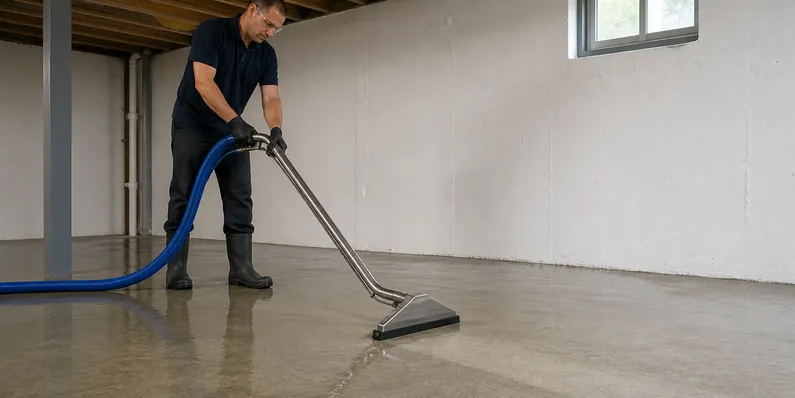
Water extraction means removing standing, pooled, or trapped bulk water from the affected area. Depending on the depth, location, and materials, a restoration crew may use a pump, a professional wet extraction unit, a floor wand, or a carpet extraction tool.
The goal is to remove as much liquid water as practical before relying on evaporation and dehumidification. Efficient extraction can shorten the later drying stage because equipment does not have to turn all that standing water into vapor first.
Extraction may include:
- Removing standing water from a basement, kitchen, bathroom, or commercial space
- Pulling water from carpet and pad when those materials are appropriate to retain
- Recovering water from hard-surface flooring and low areas
- Emptying accessible pockets where water has collected
- Repeating passes until the equipment is no longer recovering meaningful liquid
The method has to fit the loss. Deep basement water may require a different approach from a shallow appliance leak. A clean supply-line break is handled differently from a drain backup or stormwater intrusion.
Water mitigation limits additional damage
Mitigation is the emergency work intended to stop conditions from getting worse. Extraction is usually part of mitigation, but mitigation can begin before the first gallon is removed.
The work may include stopping or isolating the source when safe, checking for electrical or structural hazards, protecting unaffected rooms, moving vulnerable contents, documenting initial conditions, and determining whether the water may be contaminated. It can also include removing materials that cannot be safely cleaned or dried.
For example, a plumber may repair the failed supply line. The restoration crew then handles the water that traveled through the building. If a roof opening or broken window is still admitting rain, temporary stabilization may be needed before drying can succeed.
The article on emergency restoration versus permanent repairs explains why source repair, mitigation, and reconstruction may involve different trades even when they are coordinated under one recovery plan.
Structural drying starts after bulk water is removed
A floor can look dry while absorbent materials still hold moisture. Water can move beneath laminate, into carpet pad, behind baseboards, through drywall, and along framing. Concrete, subfloors, insulation, and wood assemblies can also retain moisture after puddles disappear.
That is why a professional drying plan starts with moisture mapping. Technicians compare affected and unaffected materials, document readings, select drying equipment for the conditions, and monitor whether moisture levels are moving toward an appropriate dry goal.
The EPA’s current water-damage guidance emphasizes prompt drying and explains that different materials require different decisions. Its clean-water table notes, for example, that drywall may sometimes be dried in place when it is not swollen and its seams remain intact, while wet cellulose insulation should be discarded.
Drying work can include:
- Removing wet carpet pad or other unsalvageable finish materials
- Opening selected assemblies when trapped moisture cannot escape
- Placing dehumidifiers to remove moisture from the air
- Directing air movement across suitable clean, wet surfaces
- Monitoring temperature, humidity, material readings, and equipment performance
- Adjusting or removing equipment as conditions change
Air movers and dehumidifiers are not visual proof that a correct drying plan exists. Their type, quantity, position, and operating time should respond to measured conditions. The crew should also be able to explain what is being dried and how progress is being documented.
For a stage-by-stage view, see what happens from extraction to drying during water damage restoration.
The water source changes the extraction and cleanup plan
Before starting fans or moving wet materials through clean rooms, the team needs to understand where the water came from and what it contacted.
Clean supply water
A sudden leak from a pressurized supply pipe may begin as clean water. The condition can change as water passes through dusty cavities, flooring, insulation, or other materials, or when response is delayed. The crew still needs to inspect the path, not only the visible puddle.
If a pipe has just failed, the guide on what to do after a burst pipe in a Massachusetts home covers shutoff, safety, documentation, and professional drying steps.
Appliance, drain, or toilet water
Water from an appliance may contain detergent, food residue, or drain contamination depending on the failed component and the point in its cycle. A toilet overflow also changes character depending on whether the water came from the supply, the bowl, or the drain system. These details affect cleaning and material decisions.
Sewage or outdoor floodwater
Sewage and outdoor floodwater require contamination control, not a standard clean-water drying setup. The CDC warns that floodwater can contain sewage, bacteria, chemicals, debris, and electrical hazards. People and pets should stay away from the affected area, and fans should not be used to spread contaminants through occupied spaces.
Professional sewage backup cleanup may include controlled removal, containment, personal protective equipment, disposal of unsalvageable porous materials, cleaning, disinfection, and drying after the contamination is addressed.
Restoration continues after the structure is dry
Water damage restoration is the full process of returning the affected property to a safe, clean, functional, pre-loss condition. The exact endpoint depends on the company’s scope. Some restoration firms perform both mitigation and reconstruction, while others coordinate repairs with separate contractors.
Restoration can include:
- Emergency contact and loss information
- Safety assessment and source control
- Moisture inspection and damage documentation
- Water extraction
- Selective removal of non-restorable materials
- Cleaning or disinfection appropriate to the source
- Structural drying and monitoring
- Contents cleaning, pack-out, or inventory when needed
- Repair or replacement of damaged finishes and assemblies
- Final documentation and review
The IICRC describes professional water damage restoration as a discipline that includes building and material science, drying technology, equipment, instruments, microbiology, and procedures for residential and commercial buildings. That broader scope is why extraction alone should not be treated as the end of the loss.
How to tell whether an estimate covers extraction only
An estimate or work authorization should make the planned stages understandable. Ask what the crew is removing, what it is drying, what materials may need to be removed, how contamination is being handled, and who is responsible for repairs.
Useful questions include:
- What is the known or suspected water source?
- Which rooms and material layers were inspected?
- Is the estimate for extraction only, mitigation and drying, or complete restoration?
- What moisture readings establish the affected area?
- Which materials are expected to dry in place?
- Which materials may need removal, and why?
- What cleaning or disinfection is appropriate for this source?
- How often will drying conditions be monitored?
- Does the scope include contents handling or pack-out?
- Who handles plumbing, roofing, electrical work, or reconstruction?
- What records will be provided to the owner and insurer?
A clear answer may still change as concealed damage becomes visible. The important point is that scope changes should connect to observed conditions and documented findings, not vague statements that every wet material must be removed.
Insurance documentation should begin before extraction
When it is safe, take wide and close photographs before water is removed or materials are disturbed. Record the apparent source, discovery time, affected rooms, damaged contents, and emergency calls. Do not delay necessary safety or loss-control work simply to create a perfect photo record.
The Massachusetts Division of Insurance says homeowners can usually make necessary temporary repairs to protect property from further damage. It advises photographing the damage before cleaning and repairs, keeping receipts, and explaining the emergency work to the insurer. Coverage still depends on the policy and cause of loss.
Restoration documentation may include:
- Initial photographs and a room-by-room affected-area record
- Source information from a plumber, roofer, appliance technician, or other trade
- Moisture readings and material observations
- Extraction, equipment, and monitoring records
- Material-removal and contents inventories
- Cleaning and sanitation records when applicable
- Estimates, work authorizations, invoices, and receipts
- Photographs after major stages of work
These records support claim review. They do not decide coverage, replace the adjuster’s investigation, or guarantee payment.
When water extraction should start
Call promptly when water is actively spreading, standing water covers a room, a finished basement is affected, water has moved beneath flooring, ceilings or walls are wet, the source may be contaminated, or you cannot safely reach the shutoff.
Do not enter standing water when electrical equipment, outlets, wiring, or a damaged structure may present a hazard. If the loss involves sewage or outdoor floodwater, keep people and pets out and wait for a contamination-controlled plan.
First Response Restoration provides 24/7 water damage restoration for homes and businesses in Massachusetts and Rhode Island. Our IICRC technicians extract water, inspect the moisture path, remove unsalvageable materials when needed, establish and monitor structural drying, clean affected areas, and document the work for property owners and adjusters.
For local help with water removal from burst pipes, overflows, appliance leaks, and flooded basements, see water damage restoration in Brockton or call (774) 670-5912.
Frequently asked questions
Water extraction is the removal of standing or pooled water with pumps or professional extraction equipment. Water damage restoration is the broader recovery process. It can include safety checks, moisture mapping, extraction, material removal, structural drying, cleaning, documentation, and repairs needed to return the property to its pre-loss condition.
Not always. Extraction removes bulk water, but moisture may remain under flooring, inside wall cavities, in insulation, or within wood and drywall. The affected materials should be evaluated and monitored. Drying, cleaning, selective removal, or repairs may still be necessary depending on the source, exposure time, and material condition.
The extraction stage may be completed during the first visit, but there is no responsible fixed time for every loss. Water volume, access, flooring, affected rooms, electrical hazards, contamination, and the source all change the work. Structural drying and monitoring usually continue after visible standing water has been removed.
Only after electrical safety and the water source have been assessed. Fans can be useful for clean-water drying, but they should not be used to spread air across sewage, outdoor floodwater, or suspected contamination. Professional evaluation helps determine whether extraction, material removal, cleaning, containment, and controlled drying should come first.
Coverage depends on the cause of loss, policy language, exclusions, endorsements, deductible, and insurer review. Notify the carrier promptly, photograph conditions before cleanup when safe, and keep estimates, drying records, invoices, and receipts. Emergency documentation supports the claim review, but the insurer and policy determine whether the work is covered.


