
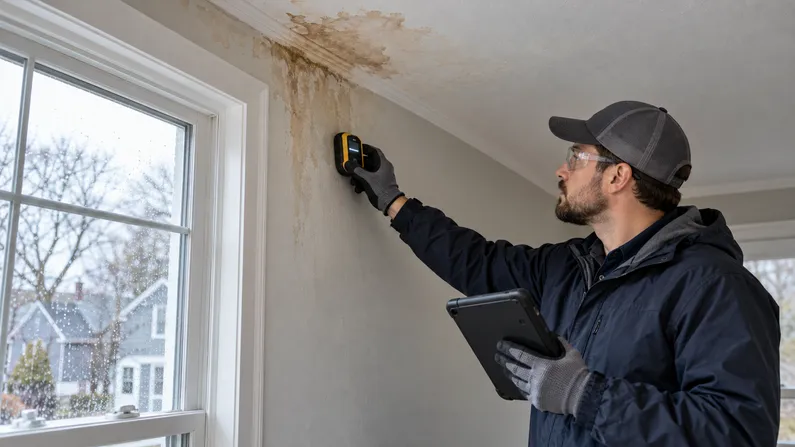
A storm has passed, but water is dripping through the ceiling. You may be wondering whether to call a roofer, move furniture, or start an insurance claim. Start with safety, then arrange to stop more water from entering and have the wet interior assessed. A roof repair and interior drying address different parts of the same problem.
If there is immediate danger, leave the area and call 911. For a leak that does not present an immediate emergency, the steps below can help you protect your home while you arrange professional help.
1. Put personal safety before the leak
Stay away from a sagging ceiling, falling debris, damaged wiring, and water near electrical fixtures or outlets. Keep children and pets out of the affected area. If a severe storm has damaged the building, do not enter until local authorities determine it is safe, as the Centers for Disease Control and Prevention (CDC) advises. If you are already inside and conditions appear unsafe, leave and seek help from a safe location.
Do not walk through standing water to reach the main electrical disconnect. If that is the only way to reach it, call a qualified electrician to turn off the power. The CDC’s electrical safety guidance also warns against touching electrical equipment while you are wet or standing in water.
Leave wet electrical equipment and appliances out of service until they have dried and a qualified electrician has inspected them. A light fixture with water around it, for example, is a reason to keep clear and get professional help, even if the leak appears to have stopped. The CDC explains the precautions for wet electrical equipment.
Do not climb onto the roof or cut into a wet ceiling. A ceiling can conceal collected water or damaged materials, and conditions may change without warning. You do not need to find the exact opening yourself before calling for help.
2. Limit additional damage from a safe position
If the room is safe to enter, place a bucket or other container under an active drip. Move undamaged belongings away from the wet area only if you can do so without approaching electrical hazards, unstable materials, or standing water. Protect important documents and valuables, and note any items that may already be wet. Do not operate household electrical equipment in the affected area until it has been cleared for use.
Take a quick look from a safe location for changes such as a spreading stain, water running down a wall, or a bulge in the ceiling. Tell the professionals what you observe and where water first appeared. A stain may be some distance from the roof opening because water can travel along building materials before it becomes visible.
Contact a qualified roofer to assess a suspected roof leak, even if the rain has stopped or you cannot see damage from the ground. Tell the roofer if water is still entering and ask whether temporary exterior protection is needed when conditions permit. A professional may recommend a temporary covering or another stabilization measure suited to the damage. Do not assume that a tarp is safe or appropriate in every situation, especially during wind or lightning.
If broken windows, doors, or other openings also need to be secured, ask about emergency board-ups. Our guide to emergency board-up after a fire or storm explains how securing an opening fits into the initial response. Board-up work does not replace a roofer’s assessment of the roof or an assessment of wet interior materials.
Document the loss for the insurance claim
Contact your insurer or insurance producer promptly and explain what happened. Massachusetts consumer guidance says homeowners policies generally require immediate notice of a possible claim. Ask how to report additional damage discovered later and what information the adjuster needs. Your policy and the circumstances of the loss determine coverage, so ask the insurer about your specific situation rather than assuming a roof leak will be covered.
When it is safe and possible, take photographs or video before temporary repairs change the scene. Include a wider view of each affected room as well as close-ups of stains, damaged belongings, and visible water. Massachusetts claim guidance recommends documenting damage before temporary repairs when possible. Do not delay an urgent safety measure just to get a better picture, and do not enter an unsafe area for documentation.
Record the temporary repairs made to protect the property and save the related receipts. The Massachusetts Division of Insurance recommends keeping those records. Keep copies of written estimates, invoices, and the dates and names of people you speak with so the sequence of work is easier to explain.
Make an inventory of damaged or destroyed property, including descriptions and photographs where available. Give the list to your insurer and keep a copy for your own records, as recommended in Massachusetts insurance guidance. Add newly discovered damage as you learn about it and ask the insurer how to submit updates.
Keep damaged property for the insurer’s inspection until your producer, adjuster, or insurer says disposal is appropriate, as Massachusetts guidance recommends. If an item creates a safety or health concern, tell the insurer and restoration team promptly and ask how to document and handle it safely.
Why the visible ceiling spot may not show the full loss
The mark on the ceiling is a clue, not a map of all the water. Moisture can collect in insulation, framing, ceiling cavities, or wall assemblies before it appears in a room. A professional investigation should account for concealed spaces behind walls, above ceilings, and in attics when those areas can be safely assessed. The Environmental Protection Agency (EPA) identifies hidden spaces including walls, ceilings, and attics as areas that may be overlooked after water intrusion.
Stopping the moisture source is essential to limiting the chance of indoor mold growth. A roofer’s temporary protection can help limit further entry while a permanent roof repair is planned, but affected interior materials still need assessment and drying. The EPA’s guide to mold and moisture explains why controlling moisture is central to mold prevention.
Act promptly even if the rain has stopped. The EPA recommends drying water-damaged areas and items within 24 to 48 hours when possible to help reduce the risk of mold growth. That is a reason to arrange an assessment quickly, not a guarantee that every material can be saved or that mold will appear on a precise schedule.
If you notice a persistent musty odor, recurring staining, or discoloration after a leak, mention it during the assessment. These signs can have different causes, and a professional can investigate the moisture problem and determine the next steps. Learn more in mold after a roof leak: signs it has spread behind walls.
Who to call for the roof and the water damage
For the exterior, a qualified roofer can assess storm damage, recommend safe temporary stabilization, and plan the roof repair. Ask what protection is being installed, what it covers, and when a permanent repair can be evaluated. Weather and access can affect the timing of that work.
For the interior, a water damage restoration team can assess where water traveled, protect salvageable contents, and develop a drying and cleanup plan. Tell the team whether the roof is still leaking and whether a roofer has been contacted. The two efforts should be coordinated: drying is difficult to complete while new water keeps entering, and sealing the roof alone does not establish that the ceiling or walls underneath are dry.
Your insurer may have instructions about inspection, documentation, or estimates. Share the contact information for your roofer and restoration team with the adjuster if requested. First Response Restoration can assist with documentation, adjuster coordination, and direct insurance billing, subject to the details of the claim.
What professional roof-leak water restoration includes
The response depends on how much water entered, how long materials remained wet, and what a safe inspection reveals. A restoration team may begin by discussing the leak, identifying affected rooms, and checking whether the exterior source is being addressed. They can then map visible and concealed moisture where access is safe and appropriate.
Moisture meters can help assess moisture in building materials and track progress during structural drying. The EPA’s worker guidance on mold cleanup describes using moisture meters to check materials and monitor drying. Readings help the team decide where drying is needed and whether conditions are improving; the appearance of a dry surface alone may not tell the whole story.
Depending on the loss, the work can include extracting visible water, moving or packing contents, and setting up professional drying equipment. Technicians monitor moisture readings, temperature, humidity, and equipment performance as the structure dries. Materials that cannot be adequately dried or safely restored may need removal. The team should explain what it finds and discuss the proposed work with you.
Cleaning, deodorizing, sanitizing, repair, and restoration follow as needed for the affected materials and contents. If mold is suspected or discovered, the team can explain how the moisture issue and affected materials will be handled. The aim is to restore the property properly, with a clear record of what was found and what work was performed.
For a closer look at the drying process, read water damage restoration: what happens from extraction to drying. Our water damage restoration service covers the wider response when water affects your home.
Prepare for the next conversation
When you call, have your address, a callback number, and a brief description of the affected rooms ready. Share when you first noticed water, whether it is still entering, whether the ceiling is sagging, and whether water is near electrical equipment. Mention any temporary roof protection already arranged and any instructions you received from the insurer. If you cannot safely see part of the home, tell the team and leave the inspection to them.
Keep a simple timeline of calls, visits, and changes in the damage. Ask who will explain the assessment, how drying will be monitored, and what to expect before repairs begin. You can use the emergency property damage checklist to organize your next steps while you wait for help.
For help with roof leak water damage after a storm, call First Response Restoration at (774) 670-5912. Our team can assess water damage and help coordinate the restoration response. If anyone is in immediate danger, leave the area and call 911 first.
Frequently asked questions
Keep people away from sagging ceilings, wet electrical fixtures, standing water, and unstable areas. Leave if the building appears unsafe. From a safe location, contain a simple drip, move unaffected belongings, document visible damage, contact your insurer, and arrange qualified roof and interior water-damage assessments.
You may need both. A qualified roofer addresses the exterior opening and temporary or permanent roof protection. A restoration company assesses where water traveled inside, manages extraction and structural drying, monitors moisture, and handles affected materials. The two scopes should be coordinated while active water entry is controlled.
A dry-looking surface does not confirm that insulation, framing, wall cavities, or the back of the ceiling are dry. Water can travel before it becomes visible. Professional moisture assessment and monitoring can help define the affected area and show whether drying conditions are improving over time.
The EPA recommends drying water-damaged areas and items within 24 to 48 hours when possible to help reduce mold-growth risk. That window is a reason to act promptly, not a guarantee about which materials can be saved or exactly when mold will appear in a particular home.
When it is safe, photograph or video the affected rooms, visible water, stains, belongings, and exterior conditions from the ground. Record when the leak appeared, temporary work performed, calls, estimates, and receipts. Keep an inventory of damaged property and ask the insurer before discarding items it may want to inspect.


