
Frozen pipes can turn a cold Massachusetts night into a major water loss. The break may stay hidden while the ice blocks the opening, then release water into a wall, ceiling, basement, or finished room when the pipe thaws.
The most useful time to prevent frozen pipes is before the temperature drops. Find the vulnerable lines, protect them from cold air, keep heat reaching the plumbing, and make sure everyone in the home knows where the main water shutoff is.
This guide focuses on steps homeowners can take safely. Plumbing repairs, pipe relocation, heat cable installation, and winterizing an unoccupied house should be planned with a licensed plumber.
Why pipes freeze and burst
Water expands as it freezes. Inside a closed plumbing line, that expansion creates pressure between the ice blockage and a closed faucet or valve. The pipe can split at a fitting or at another weak point, sometimes away from the visibly frozen section.
The American Red Cross identifies several common risk areas:
- outdoor hose connections and other lines exposed to severe cold;
- water-supply pipes in basements, crawl spaces, attics, garages, and cabinets;
- plumbing installed against exterior walls with little or no insulation;
- pipes near gaps where cold air can enter the building.
Both hot- and cold-water lines can freeze. A heated room does not guarantee that the pipe inside an exterior wall or closed cabinet receives enough warmth.
Walk through the house before freezing weather
Begin with a simple plumbing map. Follow accessible supply lines from the point where water enters the house toward kitchens, bathrooms, laundry areas, and exterior faucets. You do not need to open walls. The goal is to identify visible lines and the places where plumbing enters colder spaces.
Pay particular attention to:
- unfinished basement walls and rim joists;
- crawl spaces and attic plumbing;
- pipes inside exterior kitchen or bathroom walls;
- sinks above an unheated garage or overhang;
- garage supply lines;
- outdoor hose bibs and their interior shutoff valves;
- previous freeze locations and repaired sections;
- drafts around service penetrations, windows, and foundation openings.
Locate the main water shutoff during this walk-through. Confirm that it is accessible, label it if needed, and show every responsible adult how to use it. Do not force a corroded or stuck valve. Ask a plumber to service it before an emergency.
Insulate vulnerable pipes and reduce cold air exposure
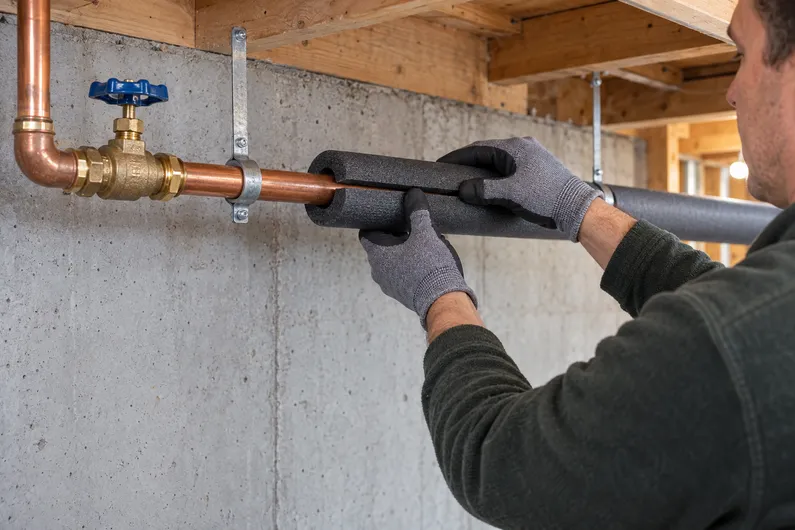
Pipe sleeves can help slow heat loss from accessible plumbing. Select insulation sized for the pipe and close the seam so the material surrounds it evenly. Elbows, valves, and fittings may need products or installation details suited to their shape and required access.
Insulation helps, but it does not produce heat. A pipe can still freeze if the surrounding space remains cold for long enough. Look at the room as well as the pipe:
- seal air leaks around openings where appropriate;
- maintain insulation in basements, crawl spaces, and attics;
- keep garage doors closed when water lines run through the garage;
- avoid blocking the warm-air path to plumbing with stored items;
- have a plumber evaluate lines that repeatedly freeze or run through an unconditioned space.
Do not improvise electrical heating products. If heat tape or heat cable is appropriate, use a listed product for the exact application and follow the manufacturer and plumber’s instructions. Never place an open flame near plumbing.
Disconnect and drain outdoor water connections
Before sustained cold arrives, remove garden hoses from exterior faucets. A connected hose can hold water where it can freeze and affect the faucet or interior supply line.
If the house has an interior valve serving an outdoor faucet, ask a plumber how that assembly should be shut down and drained. Sprinkler, pool, seasonal, and other exterior water lines should be winterized according to the installer or manufacturer’s directions.
Do not add automotive antifreeze to plumbing or outdoor supply lines. The Red Cross warns that antifreeze can be dangerous to people, pets, wildlife, and landscaping unless a specific system and qualified guidance call for an appropriate product.
Keep heat reaching pipes during a cold snap
When very cold weather is forecast, keep the heating system operating steadily. Avoid a deep nighttime setback that leaves vulnerable plumbing colder than the occupied rooms.
For sinks on exterior walls, opening the cabinet doors can help room air circulate around the pipes. Move cleaners, medicines, and other hazardous products out of reach of children and pets before leaving the cabinet open.
The Red Cross also recommends allowing a small amount of water to run from a faucet served by an exposed pipe during very cold weather. Use this as a temporary cold-snap measure for a known vulnerable line, not as a replacement for correcting drafts, insulation gaps, or plumbing problems.
The Massachusetts Division of Insurance similarly advises residents to insulate and maintain pipes, keep homes adequately heated, address exterior faucets, and open sink cabinets during cold snaps.
Prepare the house before winter travel
Do not turn off the heat when you leave during freezing weather. The Red Cross recommends setting the thermostat no lower than 55 degrees Fahrenheit, while Massachusetts guidance may recommend a higher setting for some intermittently occupied homes. The right temperature depends on the building, heating system, plumbing layout, weather, and insurer requirements.
Before an extended absence:
- Confirm the heating system is operating and fuel or service is available.
- Arrange for a trusted person to check the property.
- Consider a low-temperature alert or monitored sensor.
- Ask the insurer about vacancy, heat, inspection, and loss-prevention requirements.
- Have a licensed plumber plan winterization if the property will be unoccupied for a long period.
Shutting off and draining an entire house involves more than closing one valve. Boilers, water heaters, fixtures, appliances, and fire-protection systems can require separate procedures. Do not guess.
Warning signs that a pipe may already be frozen
If a faucet produces only a trickle or no water during freezing conditions, a supply line may be frozen. Other signs can include visible frost on accessible plumbing, an unusual bulge, or water service that changes after a sharp temperature drop.
Treat a hidden or inaccessible frozen section as a plumber’s job. A pipe may already be cracked even when no water is visible. The ice can temporarily hold water back, and the leak may begin as the pipe thaws.
If the frozen section is accessible and appears intact, follow qualified guidance. Keep the faucet open and use gentle electric heat such as a hair dryer or heating pad, working carefully and keeping electrical equipment away from water. The Red Cross says never to use a blowtorch, kerosene or propane heater, charcoal stove, or another open-flame device. Call a licensed plumber if you cannot locate, reach, or safely thaw the section.
If a pipe bursts, stop the water and protect people first
If water starts flowing from a split line, close the nearest working shutoff or the main water valve when it is safe to do so. Do not walk through standing water to reach a valve or electrical panel. Keep people and pets away from wet electrical equipment, sagging ceilings, and unstable materials.
Then:
- Call a licensed plumber to isolate and repair the failed pipe.
- Photograph visible conditions when it is safe, without delaying emergency action.
- Notify the insurance carrier and ask what records it needs.
- Move dry contents away from the water path only if the area is safe.
- Arrange extraction and moisture assessment when water has reached floors, walls, ceilings, insulation, or contents.
The guide on what to do when a pipe bursts in a Massachusetts home covers the immediate response in more detail.
Visible water removal is only the first step. Water can move under flooring, behind baseboards, into drywall, and through insulation. Professional water damage restoration uses moisture readings to define the affected area, guide extraction and drying, and monitor whether materials are responding as expected. See what happens from extraction to structural drying for the full process.
Prevention also supports a cleaner insurance record
Insurance coverage depends on the policy, cause, occupancy, maintenance, and facts of the loss. The Massachusetts Division of Insurance notes that frozen-pipe damage may not be covered when it results from negligence, such as failing to maintain adequate heat when the homeowner could have done so. Review your own policy and ask the insurer or agent about applicable conditions before winter.
Keep basic maintenance and loss records, including plumbing repairs, heating service, photographs, and receipts. These materials can help explain what happened, but they do not guarantee coverage or determine a claim outcome.
When to call First Response Restoration
A plumber repairs the failed pipe. A restoration company addresses the water that escaped into the building.
Call First Response Restoration when a burst pipe has spread water into flooring, walls, ceilings, insulation, multiple rooms, or stored contents. The team provides emergency extraction, moisture mapping, structural drying, sanitation when conditions require it, monitoring, contents documentation, and insurance-claim assistance throughout Massachusetts and Rhode Island.
For urgent water damage help, call (774) 670-5912. Taking preventive steps now can lower the chance of a winter loss. If a pipe does break, stopping the water and starting a documented drying plan quickly can limit how far the damage spreads.
Frequently asked questions
Pipes in unheated or poorly insulated spaces face the greatest risk. Check basements, crawl spaces, attics, garages, exterior walls, cabinets, and the point where the water service enters the foundation. Outdoor hose connections and supply lines near drafts also deserve attention before temperatures fall below freezing.
A small trickle from a faucet served by a vulnerable exposed pipe can help during severe cold, according to the American Red Cross. It is not a substitute for heat, insulation, or repairs. If you are unsure which line is at risk, ask a licensed plumber for guidance.
Do not turn the heat off during freezing weather. The American Red Cross recommends leaving it at no lower than 55 degrees Fahrenheit when you go away. Your home, plumbing layout, insurer, or heating professional may require a different setting, so confirm the right plan before an extended winter absence.
A weak trickle or no water from a normally working faucet during freezing weather is a common warning sign. You may also notice frost on an accessible pipe or an unusual bulge. Stop and call a licensed plumber if the frozen section is hidden, inaccessible, damaged, or unsafe to reach.
If it is safe, close the nearest working shutoff or the home's main water valve. Keep people away from standing water and electrical hazards, call a licensed plumber for the failed pipe, and document visible damage. Arrange professional extraction and structural drying when water has entered floors, walls, ceilings, insulation, or contents.


