
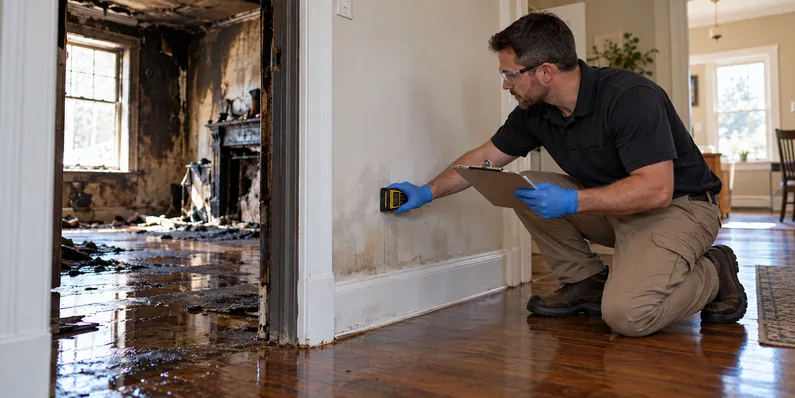
When a house fire is extinguished, the flames may be out while another form of damage is still moving through the building. Water used during suppression can travel under flooring, through wall and ceiling cavities, into insulation, and across rooms that show little visible fire damage.
Firefighting water damage is not a separate problem that can wait until soot cleanup is finished. It must be assessed as part of one coordinated fire-loss plan. The property may need water extraction, structural drying, smoke and soot control, contents protection, and safety evaluation at the same time.
The first priority is always people, not property. Stay out until the fire department or responsible authority says entry is allowed. Once the scene is released, a restoration team can document the loss, locate moisture, remove standing water, and plan drying without spreading fire residue into unaffected areas.
Why water can spread far beyond the burned room
Fire suppression is designed to control a dangerous event, not to keep building materials dry. Water can enter a structure from several directions and continue moving after the fire is out.
It may:
- run through gaps around pipes, wiring, stairs, and floor assemblies;
- soak carpet, padding, subflooring, hardwood, and trim;
- collect in wall or ceiling cavities below the fire area;
- wet insulation that hides moisture from ordinary view;
- reach furniture, boxes, clothing, documents, and electronics;
- mix with ash, soot, damaged finishes, or debris;
- migrate into rooms that appear untouched from the doorway.
Visible puddles are only the starting point. A dry-looking wall can still be wet inside, and a lower floor can receive water even when the direct fire damage occurred above it.
That is why a fire-loss inspection should connect the burned area, the water path, and the smoke path instead of treating each room in isolation.
Wait for safe access before starting water removal
Do not enter because the fire looks finished from outside. Heat can weaken materials, utilities may be damaged, and wet electrical components create an additional hazard. The American Red Cross advises staying out of a fire-damaged home until local fire authorities say it is safe to re-enter.
After access is allowed:
- Follow restrictions from the fire department, building official, utility, and insurer.
- Photograph visible fire, smoke, water, and contents damage before moving items when it is safe to do so.
- Notify the insurance carrier and ask what documentation it needs.
- Avoid powering appliances, electronics, fans, or HVAC equipment exposed to heat, smoke, soot, or water.
- Keep children, pets, and unnecessary foot traffic away from affected rooms.
The guide to the first 24 hours after fire damage explains the immediate safety, board-up, documentation, and stabilization decisions that come before detailed restoration.
What the first moisture assessment should establish
A professional assessment begins by defining where water went and which conditions could change the cleanup plan. Crews may use visual inspection, moisture meters, humidity readings, thermal imaging as a screening tool, and direct checks of accessible materials.
The assessment should answer practical questions:
- Where is standing water present?
- Which floors, walls, ceilings, and cavities are wet?
- Did water reach electrical panels, wiring, appliances, or mechanical equipment?
- Which materials are fire-damaged, water-damaged, or affected by both?
- Is the water mixed with heavy soot, ash, damaged chemicals, or other debris?
- Can wet materials be reached and dried safely?
- Which contents need protection, relocation, or specialist evaluation?
- Where should clean and affected work zones be separated?
Moisture readings are useful because they create a baseline. The team can compare later readings with the initial map to see whether the structure is drying as expected instead of relying only on touch or appearance.
Why soot control and drying must be planned together
Starting fans immediately can seem helpful, but uncontrolled air movement can spread loose particles or odor into cleaner areas. Household fans and an operating HVAC system can move soot through doorways, registers, and shared air pathways before containment and cleaning decisions are made.
A coordinated plan considers both contaminants and moisture. Depending on the loss, crews may first protect unaffected areas, remove loose debris, isolate work zones, or address unstable materials. Drying equipment is then selected and positioned for the actual water path and fire conditions.
This does not mean every fire loss requires the same containment or equipment. A small, contained fire with limited suppression water is different from a multilevel loss with open wall cavities, soaked insulation, and widespread smoke residue. The scope should follow documented conditions.
The firefighting-water restoration process
1. Document and stabilize the loss
Crews record affected rooms, materials, moisture conditions, contents, and visible fire residue. Broken openings may need an emergency board-up, and unsafe utilities or structural conditions remain under the appropriate qualified professionals.
Massachusetts DOI guidance says policyholders should give prompt notice, protect property from further damage, keep records of temporary repairs, save receipts, and maintain a damaged-property list. Those records support the claim review, but coverage still depends on the policy and carrier decision.
2. Remove standing water
Where access is safe, visible water is extracted from floors and other accessible areas. Removing the bulk water reduces continued migration and allows technicians to evaluate what remains inside materials and assemblies.
Extraction is not the same as complete drying. Water can remain in carpet backing, subfloors, wood, gypsum board, insulation, framing, cabinets, and contents after the floor surface looks clear.
3. Evaluate damaged and unsalvageable materials
Materials are considered by condition, not by one universal rule. Heat-damaged drywall cannot be restored simply because it dries. Saturated insulation may block airflow and hold debris. Some finished wood may be a drying candidate, while delaminated flooring or heavily damaged porous materials may require removal.
The EPA says moisture control is the key to preventing mold growth and recommends drying wet or damp areas within 24 to 48 hours when possible. That timeframe is an urgency guide, not a promise that every material can or should be saved.
4. Create access for structural drying
Drying cannot succeed if trapped water remains sealed inside an assembly. Controlled removal may be needed to expose wet cavities, take out damaged insulation, or reach the back of affected materials. The team should avoid removing more than the documented condition requires.
At the same time, soot and ash boundaries matter. Demolition or air movement should not carry residue into clean rooms or contaminate contents that could have been protected.
5. Dry and monitor the structure
Professional drying commonly uses dehumidification and directed air movement once the scene, utilities, and residue controls permit it. Technicians monitor temperature, relative humidity, material moisture, and equipment performance. Equipment can then be adjusted as conditions change.
The goal is not to run machines for a fixed number of days. The goal is to reach an appropriate dry condition for the affected materials and planned repairs, supported by repeatable readings.
For a closer look at those steps, see what happens from water extraction to structural drying.
6. Coordinate soot cleaning, odor work, contents, and repairs
Water mitigation does not remove smoke residue. Fire restoration may also require material-specific soot cleaning, odor-source treatment, contents inventory or pack-out, corrosion evaluation, and repair of damaged assemblies.
The sequence should prevent rework. For example, contents may need to move before wall access is created. Soot may need controlled removal before air movement increases. Repairs should wait until affected assemblies are dry, clean, and ready for reconstruction.
If belongings are involved, the guide to what can be saved after a house fire explains how exposure, material, sentimental value, and specialist needs shape pack-out and salvage decisions.
What homeowners should not do
Avoid actions that create another hazard or erase useful evidence:
- Do not enter before the property is released.
- Do not restore electrical, gas, or mechanical service yourself.
- Do not turn on the HVAC system to speed drying.
- Do not move soot-covered items through clean rooms without a plan.
- Do not discard damaged contents before photographing and inventorying them unless safety officials direct immediate disposal.
- Do not assume a surface is dry because it looks or feels dry.
- Do not apply fragrance, paint, or sealers over unresolved smoke or moisture damage.
The Red Cross notes that water damage after a fire can be dangerous and that materials not thoroughly dried can support mold and mildew. Its disaster cleanup guidance also emphasizes removing remaining water and drying waterlogged surfaces.
When professional help is the safer next step
Call a restoration professional when firefighting water has reached walls, floors, ceilings, insulation, multiple rooms, contents, or electrical and mechanical components. Professional coordination is also important when soot is widespread, the building needs board-up or controlled access, contents require inventory, or the insurer needs a documented mitigation scope.
First Response Restoration provides fire damage remediation, water damage restoration, and smoke damage restoration throughout Massachusetts and Rhode Island. The team can document affected areas, extract water, map and monitor moisture, coordinate drying with soot and contents work, communicate with the adjuster, and plan repairs after the structure is ready.
For emergency help after a house fire, call (774) 670-5912. The sooner fire, smoke, contents, and moisture conditions are evaluated together, the clearer the path to a safe and complete recovery.
Frequently asked questions
Firefighters may use substantial water to control and extinguish a structure fire. That water can move beyond the burned room through flooring, wall cavities, ceilings, insulation, and contents. Once authorities release the property, crews assess both fire damage and hidden moisture so drying work does not overlook affected materials.
Water removal and moisture control should begin as soon as authorities confirm safe access and the loss has been documented. EPA guidance emphasizes drying wet materials within 24 to 48 hours when possible to reduce mold risk. Structural, electrical, contamination, and claim requirements still determine the safe sequence.
Do not start household fans or the HVAC system without an assessment. Air movement can spread soot, ash, odor, or other particles into cleaner areas, and wet electrical components may be unsafe. Restoration crews first evaluate fire residue, moisture, utilities, and containment needs, then choose controlled drying equipment and placement.
Not automatically. The decision depends on fire and heat damage, water exposure, contamination, drying access, moisture readings, material condition, and whether residue reached concealed surfaces. Some materials can be dried and cleaned, while damaged insulation, wallboard, or other porous materials may require controlled removal to complete drying and cleanup.
Coverage depends on the policy, cause, exclusions, and the insurer's claim decision. Photograph conditions before cleanup when safe, notify the carrier promptly, keep an inventory, and save mitigation records and receipts. Restoration documentation can support review, but it does not determine whether a claim or a particular item will be covered.


