
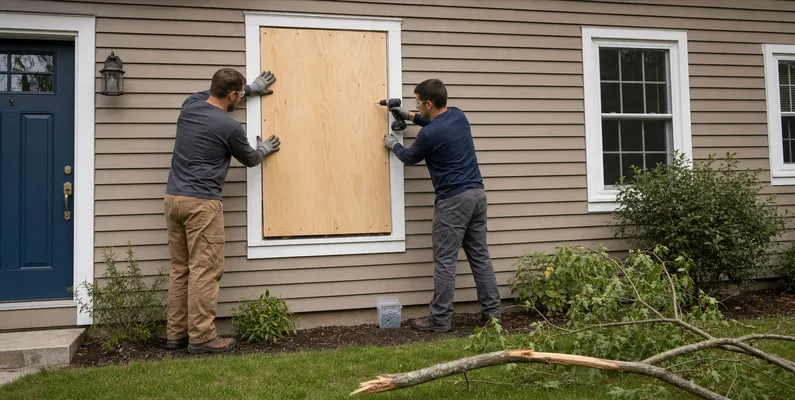
When a pipe bursts, sewage backs up, a fire damages a room, or a storm breaks a window, the property may need more than a repair contractor. It may need emergency restoration first.
Emergency restoration is the immediate work that makes a damaged property safer, stops the loss from getting worse, removes water or contamination, protects exposed openings, and documents conditions before permanent repairs begin. A general contractor may rebuild drywall, flooring, cabinets, or roofing later. The emergency restoration team handles the unstable, wet, contaminated, or smoke-damaged conditions that cannot wait.
Knowing that difference helps homeowners and business owners make the right first call. It also reduces delays between stopping the source, protecting the building, documenting the loss, and moving toward repairs.
What emergency restoration means
Emergency restoration begins with stabilization, not cosmetic repair.
The exact work depends on what happened, but the first phase may include:
- Emergency water removal and extraction
- Moisture mapping and structural drying
- Sewage containment, material removal, cleaning, and disinfection
- Fire-damage assessment and temporary stabilization
- Smoke and soot assessment, cleaning, and odor-source control
- Emergency board ups for broken windows, doors, walls, or roof openings
- Mold containment and removal when moisture has already caused growth
- Contents documentation, packing, and off-site relocation when necessary
- Photographs, readings, material records, and daily monitoring notes
These are not ordinary finish repairs. They address active conditions that can spread, contaminate clean areas, damage additional materials, or make a building harder to restore.
The sequence matters. Installing new drywall before wet framing is dry, replacing flooring before sewage contamination is removed, or painting over smoke residue can hide the problem without resolving it.
Emergency restoration, mitigation, and reconstruction are different jobs
Property-loss work is easier to understand when it is divided into three stages.
1. Emergency stabilization
The first goal is to control immediate hazards and prevent additional damage. That may mean stopping water when it is safe, extracting standing water, isolating sewage, boarding an opening, protecting contents, or preventing soot from being disturbed and spread.
2. Mitigation and cleanup
Once the scene is stable, technicians define the affected area and perform the service-specific work. Water losses require drying and monitoring. Sewage losses require contamination control and sanitation. Fire and smoke losses require residue assessment, cleaning decisions, odor treatment, and attention to firefighting water. Mold work may require containment and selective removal.
3. Permanent repair or reconstruction
After damaged areas are clean, dry, and ready for rebuilding, repair contractors replace finishes and structural components. This may include insulation, drywall, trim, flooring, cabinetry, roofing, paint, or other construction work.
One company may offer more than one stage, but the stages should still be explained separately. Property owners should know what emergency work is authorized now, what material decisions remain, and what repairs will be scoped later.
Who should you call first?
The right first call depends on the hazard. Emergency restoration does not replace firefighters, utility providers, plumbers, electricians, structural engineers, or public-health authorities.
Use this order when it applies:
- Call 911 or the fire department for fire, smoke, suspected structural collapse, immediate injury, or another life-safety emergency.
- Call the gas or electric utility for a suspected gas leak, damaged service line, sparking equipment, or another utility hazard.
- Call a plumber or appropriate trade when a broken fixture, pipe, appliance connection, roof, or mechanical system still needs source repair.
- Call an emergency restoration company for water removal, drying, sanitation, contamination control, smoke or soot cleanup, board ups, contents protection, and loss documentation.
- Notify the insurer promptly if you expect to make a claim, then follow its instructions while taking reasonable steps to prevent additional damage.
If several of these calls are needed, they can overlap. A plumber may repair a burst pipe while the restoration team removes water and maps moisture. The fire department may release a property before a board-up crew secures broken openings. The insurer may open the claim while emergency mitigation is already underway.
The FEMA guidance for returning home after a disaster advises checking for exterior damage, damaged power or gas lines, foundation cracks, and sagging ceilings or floors before entering. If there is doubt about safety, stay out until the responsible authority or qualified professional clears the area.
When a repair contractor alone is not enough
A repair contractor may be the correct call for a dry, stable, clearly defined construction problem. Emergency restoration should usually come first when the property still has an active or unresolved damage condition.
Call for restoration help when:
- Water is standing, spreading, or trapped in building materials.
- A ceiling, wall, floor, or cabinet assembly may be wet beyond what is visible.
- Sewage or floodwater has contacted finishes, contents, or occupied areas.
- Smoke odor or soot affects rooms beyond the visible fire area.
- Firefighting water remains in the structure.
- Windows, doors, walls, or roofing are open to weather or unauthorized entry.
- Mold is visible, musty odor persists, or materials remained wet after an earlier loss.
- Contents must be inventoried, cleaned, moved, or protected before demolition.
- The property owner needs a documented mitigation record for the insurer or repair team.
The question is not whether a carpenter, roofer, or plumber is skilled. It is whether the building is ready for that trade’s permanent work. Restoration creates that handoff by controlling the loss and establishing what can stay, what must be removed, and what is ready to rebuild.
What happens during the first emergency restoration visit
A well-organized first visit should reduce uncertainty. The team gathers facts, identifies urgent work, and explains the next decision rather than treating every loss the same way.
Dispatch gathers the essential facts
Be ready to share:
- The property address and best access point
- Whether everyone is safe and whether authorities have released the property
- What caused the damage, if known
- When the damage was discovered
- Which rooms or areas are affected
- Whether water, electricity, gas, sewage, smoke, or structural damage is involved
- Steps already taken to stop the source or protect the property
- Insurance claim information, if a claim is already open
This helps dispatch prepare the right crew and service plan. It does not replace the on-site assessment because damage often extends beyond the first visible area.
The crew checks safety and documents conditions
Before cleanup begins, technicians review access, active hazards, source status, affected materials, and the likely path of water, smoke, or contamination. Photographs and written observations establish what the property looked like at arrival.
For a water loss, the assessment may include specialized equipment to locate moisture that is not visible from the room. For soot, inspection should focus on appropriate actions such as close visual examination, documenting affected surfaces, and using raking light to reveal fine residue. The correct assessment method depends on the loss.
Immediate stabilization begins
The first work is selected to match the actual problem:
- A clean-water loss may require extraction, removal of unsalvageable wet materials, and professional drying equipment.
- A sewage backup requires controlled access, contaminated-material decisions, cleaning, disinfection, and drying.
- A fire loss may require emergency board ups, firefighting-water removal, contents protection, and a plan for soot and smoke damage.
- A mold condition may require source correction, containment, removal of affected porous materials, cleaning, and drying.
Emergency work should be specific enough that the owner understands what is being done now and why it cannot reasonably wait.
How the process changes by damage type
The phrase “emergency restoration” covers several technically different services. A professional response should never use the same tools and process as visual shorthand for every kind of damage.
Water damage
Water damage restoration starts with the source, visible water, and the moisture held in floors, walls, ceilings, insulation, and other materials. The team extracts water, evaluates what can be restored, removes unsalvageable materials when necessary, installs appropriate drying equipment, and monitors moisture, humidity, temperature, and equipment performance.
For a detailed view of that sequence, read what happens from extraction to drying.
Sewage damage
Sewage is a contamination event, not simply a wet-floor problem. The work emphasizes controlled access, protective equipment, removal of materials that cannot be safely restored, cleaning, disinfection, and separation of affected areas from clean spaces. Children, pets, employees, and customers should be kept away from the damaged area.
Fire and smoke damage
Fire damage restoration may combine structural stabilization, board ups, water removal, debris decisions, soot assessment, smoke cleaning, odor-source treatment, and contents work. Do not wipe soot with a wet household rag or run fans across loose residue. Those actions can smear or redistribute contamination.
The first 24 hours after fire damage require a different sequence from an ordinary remodeling project because structural safety, utilities, suppression water, residue, and access may all be unresolved.
Mold after a delayed water loss
If wet materials remained damp, the job may shift from water mitigation into mold remediation. The moisture source still has to be corrected, but containment and controlled removal may also be needed to keep disturbed material from spreading into unaffected rooms.
What the restoration company should document
Clear documentation supports the property owner, adjuster, and repair contractor. Depending on the loss, the record may include:
- Arrival conditions and source information
- Photographs of affected rooms and materials
- Moisture readings and monitoring logs when applicable
- Areas that were cleaned, disinfected, contained, or dried
- Materials removed and the reason for removal
- Equipment placement and performance records
- Contents moved, packed, cleaned, or considered unsalvageable
- Emergency board-up or temporary-protection work
- Remaining repair needs after mitigation
Documentation does not decide insurance coverage. It gives the insurer a factual record of the damage and work performed.
The Massachusetts Division of Insurance says property owners can usually make necessary temporary repairs to prevent further damage, should photograph conditions before cleanup, and should keep receipts. Policy terms still control coverage, limits, deductibles, and payment.
How to choose an emergency restoration company under pressure
Urgency should not eliminate basic verification. A reliable company should be able to explain its role, safety approach, scope, documentation, and billing process without making guarantees about insurance coverage.
Look for:
- 24/7 access to a real dispatcher
- A clear explanation of immediate work and later repair work
- Technicians trained for the specific loss type
- Licensing, bonding, and insurance appropriate to the work and state
- Written authorization and an understandable scope
- Photos, readings, logs, and material records when applicable
- Direct, calm communication with the owner and adjuster
- A plan to protect unaffected rooms and contents
First Response Restoration has served homeowners and businesses for 15 years with IICRC technicians, 24/7 emergency dispatchers, state licensing in Massachusetts and Rhode Island, direct insurance billing, and a one-hour response-time commitment.
Be cautious with anyone who demands a large cash payment, pressures you to sign a blank document, promises that insurance will pay everything, or cannot provide licensing and insurance information. The FTC’s post-disaster contractor guidance recommends checking licenses and insurance, comparing written estimates, reading the contract carefully, and avoiding wire transfers, gift cards, cryptocurrency, and cash payments.
Emergency restoration in Massachusetts and Rhode Island
Property emergencies in Massachusetts and Rhode Island come from burst pipes, failed hot water tanks, appliance leaks, roof damage, basement flooding, sewage backups, fires, and wind-driven storm damage. The immediate service should match the actual loss, not a generic cleanup package.
First Response Restoration serves residential and commercial properties across both states, including Bridgewater, Boston, Worcester, Plymouth, Providence, and surrounding communities. The team can coordinate water removal, drying, sanitation, fire and smoke cleanup, mold remediation, board ups, contents work, and insurance documentation as the conditions require.
If you are still deciding what to do in the first few minutes, use the Emergency Property Damage Checklist for a safety-first call sequence.
Stabilize the loss before rebuilding
Emergency restoration and permanent repair solve different problems. The first protects people and property, controls the loss, cleans or dries affected areas, and creates a documented path forward. The second rebuilds what the damage and mitigation work left behind.
If water, sewage, fire, smoke, mold, flood, or storm damage is still active or unresolved, call First Response Restoration at (774) 670-5912. Emergency dispatchers are available 24/7 across Massachusetts and Rhode Island, with a one-hour response-time commitment for homes and businesses.
Frequently asked questions
The company first confirms access and immediate hazards, checks whether the damage source is controlled, documents arrival conditions, and identifies work needed to prevent additional loss. The first action may be water extraction, sewage containment, board up, contents protection, or service-specific assessment. Permanent repairs usually begin only after stabilization and cleanup.
You may need both. A plumber repairs the failed pipe or fixture. A restoration company removes released water, checks how far moisture traveled, removes materials that cannot be restored, dries the structure, and documents the loss. Calling both promptly prevents the source repair from leaving hidden water damage untreated.
A general contractor may be well suited for reconstruction, but active water, sewage, soot, smoke, mold, or exposed openings require specialized stabilization and cleanup first. Ask who will control contamination, document affected materials, monitor drying, and establish rebuild readiness. Permanent repair work should begin after those conditions are resolved.
Do not delay life-safety actions or reasonable steps needed to prevent additional damage. Notify the insurer promptly, photograph conditions when safe, keep receipts, and ask about claim procedures. Avoid unnecessary permanent repairs or discarding possible total-loss items until the carrier provides direction. Coverage decisions remain with the insurer.
Provide the address, damage type, discovery time, affected rooms, known source, current hazards, utility status, access details, and any actions already taken. Mention sewage, fire residue, standing water, visible structural damage, or occupants with special access needs. Share the claim number and adjuster contact if a claim is already open.
Readiness depends on the loss. Water-damaged assemblies should reach appropriate dry conditions, contaminated areas should be cleaned and disinfected, soot and odor sources should be addressed, and unstable openings should be secured. The restoration record should identify completed mitigation, removed materials, remaining damage, and the areas released for reconstruction.


