
Property damage creates pressure to act immediately, but the first priority is making safe decisions in the right order. This checklist helps homeowners and business owners respond after water, sewage, fire, smoke, mold, or storm damage without entering unsafe areas or damaging important insurance documentation.
Use the steps that apply to your situation. Fire departments, utilities, public health agencies, and emergency officials always take priority over a general checklist.
1. Protect people before protecting property
Move occupants, employees, customers, and pets away from active hazards. Call 911 for fire, suspected structural failure, medical emergencies, or immediate electrical danger. Do not enter a fire-damaged building until authorities permit access.
Avoid standing water near electrical equipment, ceilings that are sagging, exposed wiring, unstable debris, strong chemical odors, and sewage-contaminated areas. The U.S. Fire Administration’s guidance for after a fire explains why official clearance and careful re-entry matter after fire damage.
If floodwater may be contaminated, follow the CDC’s floodwater safety guidance. Keep children and pets away, cover open wounds, and avoid direct contact whenever possible.
2. Stop the source only when it is safe
If a supply pipe or appliance line is releasing clean water and the shutoff is safely accessible, turn it off. Do not enter standing water to reach a valve, electrical panel, or appliance. Contact the utility or emergency service when gas, electricity, or public water infrastructure may be involved.
For roof, window, door, or wall openings, avoid climbing onto damaged surfaces. Professional emergency board up services can temporarily protect exposed areas after authorities allow stabilization work.
3. Call the appropriate emergency contacts
Keep a short contact list so important calls are not lost in the confusion:
- Emergency services or the fire department when life safety is involved.
- The appropriate utility for gas, electrical, or public water hazards.
- Your insurance carrier or agent to report the loss and obtain a claim number.
- A restoration company for assessment, stabilization, cleanup, and drying.
- A property manager, landlord, or building owner when you do not own the structure.
First Response Restoration provides 24/7 emergency help across Massachusetts and Rhode Island. Call (774) 670-5912 when water, sewage, fire, smoke, mold, or storm damage requires professional response.
4. Document conditions before moving items
Take wide photographs of each affected room, followed by close views of water lines, soot, damaged finishes, broken openings, visible growth, and affected belongings. Photograph the likely source when it is safe and accessible. Record a short video walkthrough and narrate what you see.
Start a written loss log with the discovery time, emergency calls, claim number, people contacted, and work authorized. Save receipts for temporary protection, emergency lodging, supplies, and other loss-related expenses. Do not discard damaged property until your insurer provides direction unless an item presents an immediate health or safety hazard.
5. Keep clean areas separate from damaged areas
Limit foot traffic through affected rooms. Do not carry sewage-contaminated items through clean living areas without containment. Avoid operating HVAC equipment when smoke, soot, mold, or contamination may have entered the system unless a qualified professional says operation is appropriate.
Do not place fans in a sewage area or direct airflow across visible mold. Air movement can spread contamination into spaces that were not initially affected. Professional containment and equipment placement depend on the damage source, affected materials, and building layout.
6. Avoid cleanup methods that can make damage worse
Different losses require different precautions:
| Damage condition | Avoid | Appropriate next step |
|---|---|---|
| Water near electricity | Entering water or touching equipment | Keep the area clear and contact emergency or utility help |
| Sewage backup | Household vacuums, fans, or unprotected handling | Arrange contaminated-water removal and professional disinfection |
| Fire and soot | Scrubbing walls or using an untested cleaner | Wait for residue and material assessment |
| Smoke odor | Applying fragrance before removing residue | Locate, clean, or remove the odor source |
| Visible mold | Dry brushing, sanding, or uncontrolled demolition | Correct moisture and evaluate containment and removal needs |
| Damaged openings | Climbing on unstable roofs or walls | Arrange temporary board up or weather protection |
The EPA’s mold cleanup guidance emphasizes correcting the moisture problem and selecting cleanup precautions according to the size and nature of the affected area.
7. Prepare useful information for the restoration team
When you call, be ready to explain:
- The property address and safest access point
- What happened and when it was discovered
- Whether the source is still active
- Which rooms and floors appear affected
- Known electrical, structural, contamination, or access hazards
- Whether emergency officials have cleared the property
- The claim number, if one is already available
- Any occupants who need accessibility or health-related accommodations
Accurate details help the dispatcher prepare the responding technicians and equipment. Conditions may still change after arrival, so the on-site assessment determines the actual cleanup plan.
8. Understand what professional restoration should document
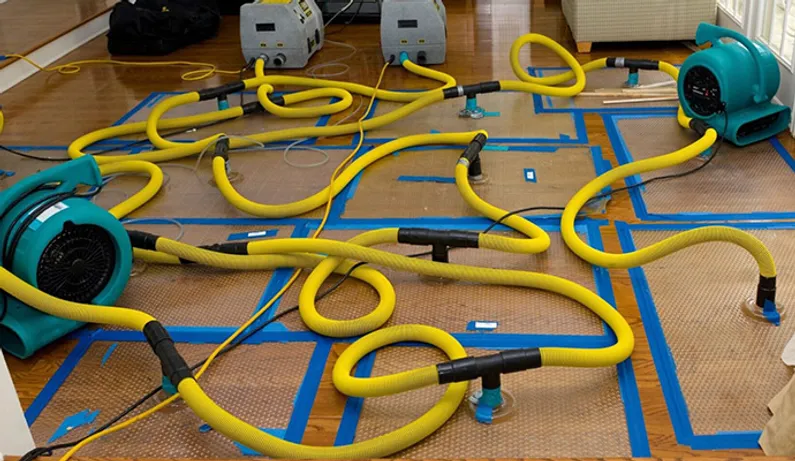
A professional scope may include source information, photographs, moisture readings, affected materials, contamination controls, removed materials, equipment placement, monitoring results, contents decisions, and remaining repair needs. Documentation should describe observed conditions and completed work without promising insurance coverage.
The carrier uses the policy, cause of loss, exclusions, endorsements, and supporting records to decide coverage. Restoration documentation helps establish facts, but it does not replace the insurer’s coverage determination.
9. Follow the service-specific next step
Choose the guide that matches the primary damage:
- Water damage restoration for extraction, moisture mapping, drying, and monitoring
- Sewage backup cleanup for contamination control, removal, disinfection, and drying
- Fire damage restoration and remediation for stabilization, suppression water, debris, soot, contents, and recovery planning
- Smoke damage restoration for residue assessment, material-appropriate cleaning, and odor-source treatment
- Mold remediation for moisture correction, containment, material removal, cleaning, and drying
- Emergency board ups for temporary protection of damaged openings
A concise emergency checklist
Before the restoration team arrives, confirm that you have:
- Moved people and pets away from unsafe areas
- Called emergency services or utilities when necessary
- Stopped the source only if it was safe to do so
- Reported the loss to the insurer
- Photographed visible conditions without delaying urgent work
- Protected clean areas from contaminated traffic
- Avoided unsafe DIY cleaning or demolition
- Saved receipts and started a loss log
- Shared access, hazard, and claim details with the responding team
Fast action matters, but safe and documented action matters more. First Response Restoration helps homeowners and businesses stabilize property damage, begin cleanup, and organize the records needed for the next stage of recovery.
Frequently asked questions
Start with life safety and leave areas with fire, electrical, structural, gas, or contaminated-water hazards. If it is safe, stop the source, protect clean areas, photograph conditions, notify your insurer, and call a restoration professional when water, smoke, sewage, mold, or structural exposure extends beyond a small controlled area.
Turn off water or other utilities only when the shutoff is safely accessible and you understand the risk. Do not approach damaged wiring, standing water near electrical equipment, gas odors, unstable structures, or active fire conditions. Contact the appropriate utility, emergency authority, plumber, or restoration dispatcher for unsafe situations.
Photograph the source, affected rooms, water paths, damaged materials, contents, soot, smoke residue, exposed openings, and visible contamination from a safe location. Record when the loss was discovered, what emergency steps were taken, who was contacted, and keep receipts, estimates, moisture records, removal notes, and restoration invoices.


