
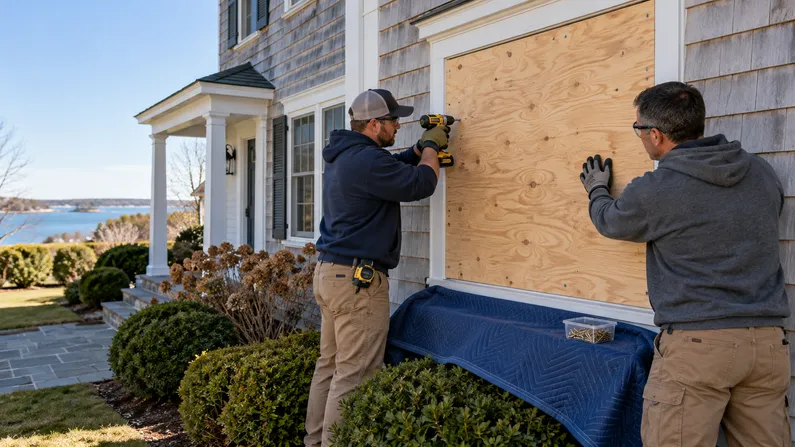
An emergency board-up closes a broken window, damaged door, or other opening so the property is less exposed while cleanup and permanent repairs are organized. It is often needed after a house fire, severe storm, fallen tree, vehicle impact, vandalism, or forced entry.
The first priority is not the plywood. It is confirming that the property can be approached safely. Fire officials, building officials, utility crews, or other emergency responders may need to control hazards and release the scene before a restoration crew begins. Once access is authorized, professional emergency board-up service can help stabilize the opening, document the loss, and create a safer handoff to the next stage of restoration.
This guide explains when board-up is appropriate, what homeowners can expect from the process, how it fits into an insurance claim, and what it cannot fix.
When is emergency board-up necessary?
Board-up is usually needed when damage creates a direct path into the building or leaves an opening that cannot be secured normally. Common examples include:
- A window shattered by heat, wind, debris, vandalism, or a falling branch
- An exterior door or frame damaged by fire, forced entry, or impact
- A garage opening that no longer closes after structural or mechanical damage
- A wall opening created during firefighting or emergency access
- An exposed section of the building envelope after localized fire or storm damage
The purpose is to reduce additional exposure to rain, wind, animals, debris, and unauthorized entry. It can also help keep people from accidentally entering an unsafe area. Board-up does not prove that the rest of the building is secure or structurally sound.
A damaged roof may need a temporary tarp or another stabilization method rather than a vertical board. Large structural openings, upper-story access, damaged masonry, and unstable framing require a different plan. A qualified crew should assess the specific opening instead of treating every loss as a simple window-covering job.
Safety comes before temporary stabilization
Do not enter because the flames are out or the storm has passed. Fire, impact, and wind damage can leave hazards that are difficult to see from outside.
The American Red Cross advises people checking a home after a fire to follow official access restrictions and look for exterior signs of damage before entering. A jammed door can be supporting part of the structure. Gas odors, hissing, sparking, damaged service lines, or visibly shifted walls are reasons to leave the area and contact emergency services or the appropriate utility.
Before board-up begins, the responsible crew should confirm:
- The scene has been released by the authority controlling it.
- Electrical, gas, structural, and falling-debris hazards have been addressed or clearly isolated.
- The opening can be reached without unsafe ladder placement or entry into an unstable area.
- Broken glass and sharp debris can be controlled without spreading them through the property.
- The temporary closure will not block an essential safety access point without an approved alternative.
Homeowners can help by keeping family members and pets away, sharing known utility information, and identifying who has authority to approve access. Do not climb, move unstable debris, or reach through broken glass to make the area easier for the crew.
What happens during professional board-up service?
The exact scope depends on the damage, but a careful board-up normally follows a documented sequence.
1. The crew assesses the opening and surrounding structure
Technicians inspect the exterior approach, the opening, nearby trim or siding, the frame, and any visible structural damage. They determine whether the area can be stabilized with a fitted panel or needs a specialist, additional shoring, a roof cover, or another temporary measure.
This first assessment also separates board-up work from the broader restoration problem. A fire loss may involve smoke odor, soot, damaged contents, compromised finishes, and firefighting water. A storm opening may have allowed water into insulation, walls, or flooring. Closing the opening is important, but it does not replace fire damage remediation or water damage restoration.
2. Existing conditions are documented
Wide and close photographs can show the affected elevation, opening, broken components, surrounding finishes, and visible interior exposure. Measurements and notes record what the crew found before temporary work changed the appearance.
This documentation helps the property owner explain why emergency stabilization was necessary. It can also distinguish pre-existing conditions from damage caused by the covered event. Photographs do not guarantee coverage, but a clear timeline and scope can make the claim easier to review.
3. Loose hazards are controlled
Accessible broken glass, projecting fasteners, and loose debris may need to be removed or contained. The crew should protect nearby siding, trim, landscaping, and interior finishes while working. Debris handling changes when materials are contaminated by soot, water, chemicals, or other hazards.
Homeowners should not sweep fire residue or handle sharp debris simply to prepare for the board-up. If a fire caused the opening, read the first 24 hours after fire damage guide for a safer sequence of calls and decisions.
4. A fitted temporary closure is installed
The crew measures the opening and selects a panel and fastening method appropriate for the surface and conditions. The closure should be secure, cover the exposed area, and avoid unnecessary additional damage. The specific method depends on the frame, siding, masonry, available interior access, and whether the remaining assembly can safely accept fasteners.
The goal is temporary protection, not a finished repair. A panel that looks secure from the street can still be unsuitable if it is poorly fitted, attached to damaged material, or leaves gaps that admit weather.
5. The crew records completion and next steps
Final photographs should show the stabilized opening and surrounding area. The work record can identify the location, panel dimensions, materials used, access limits, visible related damage, and any condition requiring follow-up.
The homeowner should receive a clear explanation of what was secured, what remains unsafe, and who needs to inspect or repair the property next. That may include a structural engineer, electrician, plumber, roofer, window or door contractor, restoration company, or reconstruction contractor.
How board-up fits into an insurance claim
Emergency board-up is generally treated as temporary mitigation, not a coverage decision or permanent repair authorization. The Massachusetts Division of Insurance says homeowners policies generally require owners to protect property from further damage. Its guidance specifically identifies materials used to board broken windows as an example of temporary repair costs homeowners should document and retain.
The Division also recommends taking photographs or video before temporary repairs when safe and keeping receipts. Permanent repairs should normally wait until the insurer has had an opportunity to inspect, unless the carrier provides different instructions.
After the immediate safety response:
- Notify the insurer or agent promptly and request a claim number.
- Ask whether the carrier has emergency-mitigation instructions or a preferred documentation process.
- Photograph exterior conditions before work begins if you can do so without entering a restricted area.
- Keep the board-up authorization, measurements, work notes, photographs, invoice, and receipts.
- Ask before discarding damaged windows, doors, locks, or other components the adjuster may want to inspect.
- Record every conversation with the insurer, including the date, time, person, and instructions given.
The Massachusetts disaster claim FAQ confirms that boarding damaged windows and patching holes are appropriate temporary repairs. It also advises retaining labor and material receipts and explaining the temporary work to the adjuster. Actual payment still depends on the cause of loss, policy terms, exclusions, limits, deductible, and carrier review.
Why DIY board-up can create additional risk
A small ground-floor opening may appear straightforward, but the condition around it can make the job hazardous. Fire-weakened framing, overhead glass, unstable masonry, damaged electrical wiring, hidden nails, wet surfaces, and upper-story access can turn a temporary repair into a serious injury risk.
Improvised fastening can also damage siding, trim, frames, or masonry. A poorly fitted panel may pull loose in wind or leave gaps around the opening. Entering to secure a board from inside may violate an official restriction or expose the homeowner to smoke residue, sharp materials, or structural hazards.
Do not attempt board-up when:
- Fire or building officials have not released the property
- The opening is above safe ground-level reach
- The wall, roof, porch, stairs, or surrounding frame appears unstable
- Glass remains overhead or embedded in the frame
- Gas, electrical, chemical, or active water hazards are present
- The work would require entering a smoke-damaged or structurally compromised area
- You cannot identify a sound attachment surface
Calling a professional is not only about tools. It is about recognizing when the opening is part of a larger loss that needs coordinated stabilization and restoration.
Board-up is the start of recovery, not the finish
A secured opening can make a chaotic situation feel more controlled, but the property still needs a complete damage assessment. After a fire, soot and smoke odor can spread beyond the visibly burned room. Firefighting water can soak wall cavities, flooring, insulation, and contents. After a storm, wind-driven rain may travel far from the broken window or door.
The next steps may include:
- Structural and utility inspections
- Water extraction and moisture mapping
- Controlled removal of unsalvageable materials
- Smoke, soot, and odor remediation
- Contents inventory, cleaning, or pack-out
- Drying, sanitation, and environmental controls
- Permanent window, door, roof, siding, and interior repairs
If you are unsure which trade should arrive first, the guide to emergency restoration versus repairs explains the roles of emergency responders, plumbers, restoration technicians, adjusters, and repair contractors. The emergency property damage checklist can also help organize the first calls, photographs, records, and safety decisions.
Get emergency board-up help in Massachusetts and Rhode Island
First Response Restoration provides emergency board-up and restoration support for homeowners and business owners across Massachusetts and Rhode Island. Our team can document the opening, install temporary protection when conditions allow, identify related fire or water concerns, and coordinate the next restoration steps.
For emergency assistance, call (774) 670-5912. If there is an active fire, gas odor, downed electrical service, suspected structural collapse, or another immediate life-safety threat, leave the area and call 911 first.
Frequently asked questions
Emergency board-up is appropriate when a broken window, damaged door, compromised wall opening, or other breach leaves the home exposed to weather, animals, unauthorized entry, or additional damage. The property must first be released by fire officials or other authorities, and immediate utility or structural hazards must be addressed.
Do not approach an opening when the structure may be unstable, utilities are unsafe, glass remains overhead, or fire officials have restricted entry. Ground-level work can still involve sharp debris and hidden damage. A professional can document the opening, choose a secure method, and avoid unnecessary damage to surrounding finishes.
Many policies require reasonable steps to protect damaged property from further loss, but coverage depends on the cause, policy language, limits, deductible, and carrier review. Notify the insurer promptly, photograph conditions before temporary work when safe, keep receipts, and ask what materials or damaged items should remain available for inspection.
No. Board-up is temporary stabilization intended to close an opening and reduce further exposure until permanent repairs can be planned. It does not establish that framing, roofing, windows, doors, siding, utilities, or interior materials are safe. Those conditions still require the appropriate inspections, cleanup, drying, remediation, and reconstruction.
Stay outside restricted or visibly unstable areas, keep children and pets away, and call emergency services if you smell gas, see sparking, or face an immediate safety threat. If authorities allow it, take exterior photos from a safe location, contact your insurer, and gather the claim number and property access details.


